Sourced fact
The News
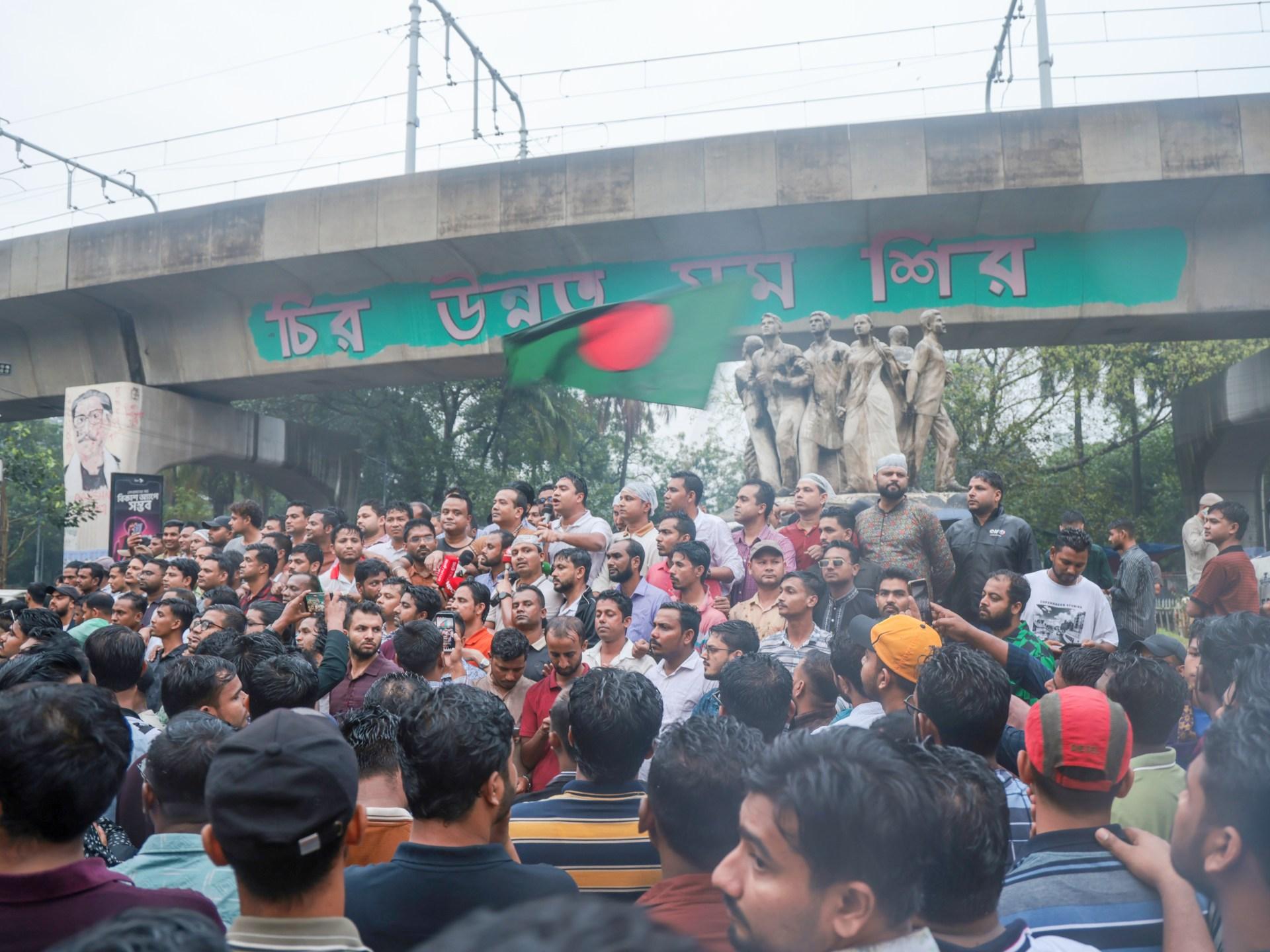
Bangladesh has announced the deployment of additional paramilitary forces to assist the government in containing a wave of violence that erupted following the authorities' refusal to grant former leader Sheikh Hasina's request to return to the country. These disturbances, which lasted for a week, resulted in the death of at least four people, while police offices, banks, and even the home of Nobel laureate Muhammad Yunus were looted and burned in several regions. These events are part of widespread protests organized by supporters of the banned "Awami League" party, which was led by Hasina before she fled to India in July 2024.
Prime Minister Tarique Rahman told parliament that India bears responsibility for the disturbances, noting that those who have fled follow orders from the government in the neighboring country attempting to overthrow Bangladesh. The government official added that the state does not issue passports to individuals accused of murder and evading justice, affirming that Hasina's case will be handled through extradition treaties with India. Local reports also stated that Muhammad Yunus's home, which won the Nobel Peace Prize, was burned in Chittagong, while a police spokesperson denied any casualties during the fire.
According to expert analyses, the protests are primarily concentrated in areas that were support bases for Hasina's party, such as Noakhali and Comilla (referred to in the source context as Gobalgonj/Gopalganj), suggesting they may not be entirely spontaneous but locally organized. Analyst Kandekar Tahmid Rujan indicated that the limited geographical scope of the disturbances so far does not reflect a popular national movement capable of fundamentally challenging the incumbent government. He also added that the current situation raises concerns about overall political stability despite the absence of widespread popular momentum at this stage.
Hasina faces an in absentia death penalty charge for crimes against humanity due to her suppression of student protests in 2024, which resulted in the deaths of nearly 1,400 people according to UN estimates. Attorney General Muhammad Aminul Islam stated that the former leader has no choice but to face the death sentence if she returns to Bangladesh, while Hasina denied these charges and declared her willingness to return and surrender for trial after completing official procedures. Protesters also demanded the lifting of the ban on her party and the release of its leaders from prison.
Analysis & context
Analysis & Context
From an analytical perspective, the current situation in Bangladesh reflects the fragility of political stability following the student uprising led by the opposition in July 2024, which ended with the collapse of Hasina's rule. The current government's refusal to grant Hasina a passport represents a sensitive legal and political turning point, as the new authority seeks to consolidate its legitimacy by enforcing international court rulings that condemned Hasina for crimes against humanity and ordered her in absentia execution.
In the broader context, analyst reports indicate that current protests may not be entirely spontaneous, as they concentrate in areas that historically served as strongholds of the Awami League party. This pattern of geographically limited mobilization differs from the broad popular movements witnessed in the country previously, suggesting attempts to exploit deep political sentiments without achieving a nationwide momentum that threatens the current government's stability fundamentally.
Historically, relations between Bangladesh and India have been complex and intertwined, particularly regarding refugee issues and border disputes. The Prime Minister of India's accusation of funding disturbances reflects existing geopolitical tensions, as India plays a pivotal role in the regional political landscape and uses its influence to support certain factions or influence election outcomes in neighboring countries.
Furthermore, the Muhammad Yunus issue symbolizes a deep division within Bangladeshi society between those who support the socio-economic development model he provided and those who criticize it vehemently. The attack on his home and institutions such as Grameen Bank reflects intense political polarization, where national symbols have become targets of retaliatory attacks amidst a tense political climate.