Sourced fact
The News
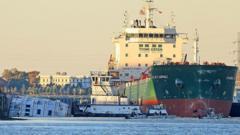
The National Transportation Safety Board (NTSB) reported that a malfunction in the steering system was the direct cause of the tanker "Atlantic Asphalt" colliding with a moored cruise ship in the Port of New Orleans on Friday. According to preliminary data released by the board during a press conference on Sunday, this malfunction caused the rudder to remain fixed in one position, which led the vessel to drift toward the eastern bank of the Mississippi River before the collision occurred.
Bart Barnum, the lead investigator for the National Transportation Safety Board, stated that there was a problem with the steering system on the tanker that caused its course to deviate, confirming that the exact cause of this malfunction has not yet been determined and that the board is investigating all possible scenarios to classify it as a "steering casualty." Officials also noted that warning systems on the ship were activated shortly before the incident, with orders given to deploy fenders and take emergency procedures to handle the situation.
The collision resulted in injuries to 32 passengers from the American cruise ship "American Heritage," who sustained non-life-threatening injuries and were transported to hospitals, while no passengers or crew members went missing. Rescue operations began around 1:30 PM Eastern Time when passengers started disembarking from the sinking ship, which was filling with water before listing to one side, while rescue teams closed river traffic to facilitate search and rescue efforts.
The National Transportation Safety Board expects to issue a preliminary report on the incident within 30 days of the day the press conference was held. The cruise ship "American Heritage," operated by "American Cruise Lines," was on its eighth-day voyage, which included stops in Louisiana and Mississippi states before the tragic accident occurred.
Analysis & context
Analysis & Context
From an analytical perspective, this incident serves as a stark reminder of the technical challenges facing navigation in large rivers such as the Mississippi River, where even a minor failure in electronic or mechanical systems can lead to major human tragedies. NTSB reports indicate that modern steering systems are extremely complex and that any malfunction within them could have severe consequences, especially when ships approach shorelines or crowded areas.
In a broader context, collision incidents on American rivers reveal an increasing reliance on technology that may be susceptible to unexpected failures, necessitating a rigorous review of maritime safety protocols. Additionally, the nature of large cruise ships makes them more vulnerable to danger if control is lost compared to smaller cargo vessels or traditional ships.
The response by authorities and ports in New Orleans demonstrated rapid coordination between rescue teams and evacuation operations, reflecting the importance of emergency infrastructure in major cities located along major riverbanks. Furthermore, the ongoing investigation by the National Transportation Safety Board highlights the necessity for transparency in revealing the true causes of maritime accidents to ensure they do not recur in the future.
Finally, this incident underscores the need to enhance international and local cooperation in the field of maritime and riverine transport safety, especially with the increasing number of cruise ships visiting major American ports.