Sourced fact
The News
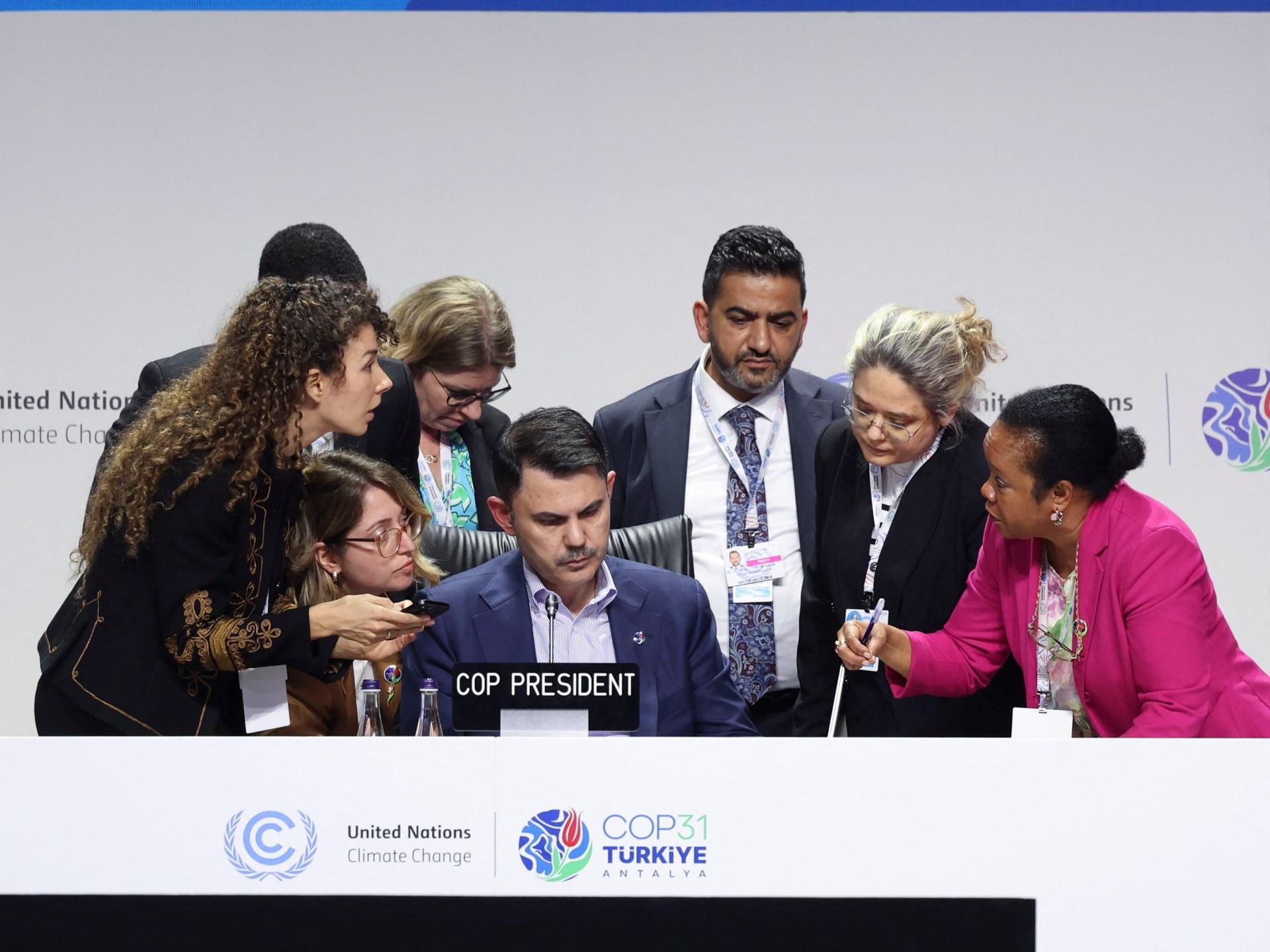
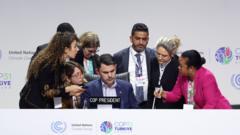
Global Climate Change Conference (COP34) negotiations in Antalya, Turkey, came to a halt on Sunday after countries failed to reach a new global agreement, threatening to postpone the meetings until next year unless disagreements are resolved. A new draft of the agreement was published in the early hours of the morning, attempting to bridge the gap between host nations Turkey and Australia and the disputing parties. Although this draft still lacks any explicit mention of "transitioning away from fossil fuels," it acknowledges for the first time that the world is on the verge of missing the critical goal of keeping temperature rise below 1.5 degrees Celsius.
The absence of a specific figure for financial assistance needed to adapt to climate change is another point of contention, as the latest draft deferred this decision to future meetings, which may disappoint the African Group that had expected specific amounts. Meanwhile, the European Union and Pacific Island nations moved against removing any reference to fossil fuels from the text, while the EU has yet to comment on its reaction to this new draft. Turkey's Environment Minister and COP34 Director, Murat Korum, urged delegations to consider the new decision deeply, stating that a deal is closer now than at any previous time.
The summit witnessed significant tensions between countries such as Panama, Tuvalu, and France, which demanded a renewed commitment to transitioning away from fossil fuels, while Australia defended focusing on implementation and shifting to clean energy sources rather than adding texts about fossil fuels. Panama's Environment Minister described this omission as completely unacceptable, while Tuvalu's Prime Minister considered the lack of mention of fossil fuels a red line that cannot be crossed because it relates to the root causes of all climate disasters. France also criticized the text's references to carbon capture and storage technologies, viewing them as a license for countries to continue burning oil and gas, while the draft reduced commitments to these technologies to alleviate European concerns.
While UK Energy Minister Matt Hancock confirmed his team was still working on achieving an agreement, EU Climate Commissioner Wopke Hoekstra stated that failing to secure necessary climate actions means there is no agreement at all. Environmental activists described the negotiations as the worst COP summit ever due to ongoing disagreements over funding and a just transition away from fossil fuels. The summit faces the risk of losing the critical number of participating countries if negotiating teams are forced to return to their countries on Sunday morning after far exceeding the original Friday deadline.
Analysis & context
Analysis & Context
From an analytical perspective, this situation represents a critical turning point in the history of global climate negotiations, where countries struggle between the urgent need to address the effects of climate change and the political and economic reality pushing them to protect the interests of the traditional energy sector. Acknowledgment of surpassing the 1.5-degree Celsius goal indicates that the world has entered a "surpassing" phase warned against by science, where millions of people will face new risks such as rising sea levels and severe heatwaves.
In the broader context, the gap emerges between commitments by major industrialized nations and expectations from poor developing countries already suffering from the effects of climate change. The absence of a specific adaptation budget figure in this project reflects continued tension over fair financing, which African Group leaders view as a right rather than an act of charity, as expressed by Ghanaian Environment Minister Zanitor Agiman Rawlins.
Furthermore, the disagreement over carbon capture, utilization, and storage (CCUS) technologies highlights the divergence in perspectives between European countries that see them as an incentive to continue using fossil fuels, and small island nations that consider them an excuse to delay taking radical action. These dynamics reflect the immense difficulties in achieving the goals of the Paris Agreement amidst conflicting national interests and urgent global needs.