Sourced fact
The News
Hundreds of Palestinian displaced persons in Gaza have protested against the continued destruction of residential buildings behind the line to which Israel withdrew under the previous ceasefire agreement. Journalist Mitham Khalout stated that displaced people living near the "Yellow Line" gathered on Saturday for their protest against the escalation of Israeli airstrikes. Khalout explained that this line separates areas under Israeli control from the Hamas-governed area since the October 2025 ceasefire agreement was signed.
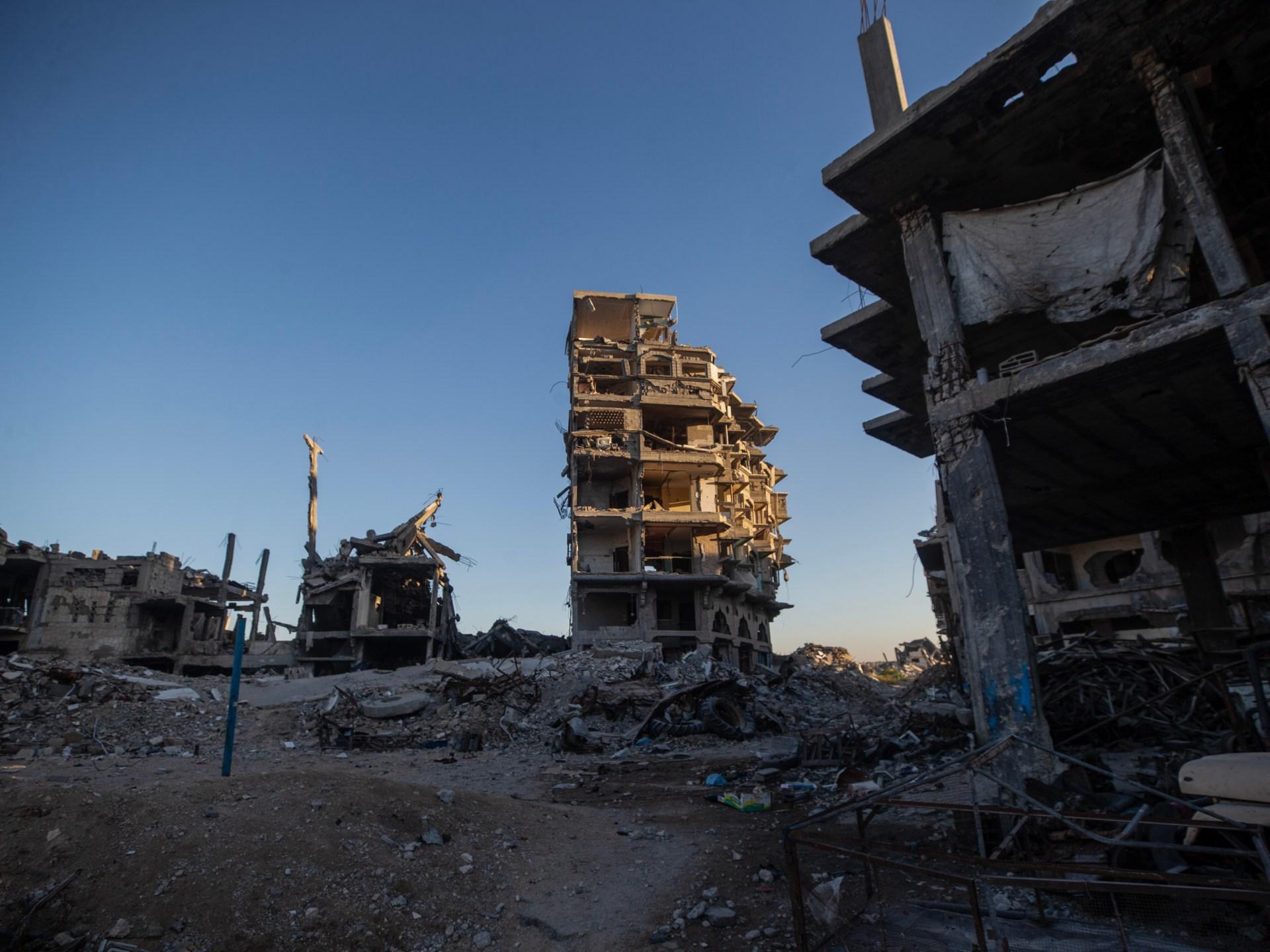
Mohammed Musleh, head of the Majahi municipality in Deir Balah, pointed to the destruction of over 500 residential units in less than a month as part of what appears to be a systematic policy of displacing residents. The Ministry of Public Works and Housing in Gaza reported that Israeli attacks have displaced 350,000 families after destroying eighty percent of homes in the enclave, while recent floods destroyed temporary tent housing.
In another development, an Israeli attack on a food aid transport vehicle killed three people, with a fourth person dying later, bringing the total death toll since October 2025 to 1,661 according to the Ministry of Health. The ministry also reported that 55 Palestinians were injured in the past 24 hours, raising the total number of injuries since the start of the truce to 6,062.
The Civil Defense in Gaza announced the recovery of corpses and remains of 129 people from destroyed homes in Nwaras Camp, Al-Zawiya, and Deir Balah in central Gaza. Ramiz Al-Aidi, Director of Civil Defense in Central Gaza, stated that 233 other individuals are presumed to be buried under the rubble of these destroyed buildings.
Civil Defense noted that the recovery operation, which lasted 53 days, marks the conclusion of the second phase of a rescue project funded by the International Committee of the Red Cross. The agency had predicted in October that approximately 8,000 bodies remained under the rubble in the enclave, including 4,000 in areas under Israeli control, warning that the recovery process could take between eight and ten years with available equipment.
Analysis & context
Analysis & Context
Analytically, the mayor's statements indicate a shift in the nature of the war from traditional military operations to a systematic policy targeting population displacement through the destruction of residential infrastructure, which contradicts the spirit of previous ceasefire agreements. This expansion of territorial control challenges international agreements and raises questions about the fate of civilians living in catastrophic humanitarian conditions amidst widespread devastation.
In the broader context, the "Yellow Line" represents a major geographical and political turning point in the Gaza Strip; while it was intended to be the dividing line where Israeli forces withdrew, the reality on the ground shows the exact opposite, with the Israeli army controlling about two-thirds of the sector. This geographical change deepens human suffering and creates a new reality that radically reshapes the region's demographic and political map.
Furthermore, the body recovery operation conducted by Gaza's Civil Defense, which has been ongoing since October 2025, reveals the unprecedented scale of the humanitarian catastrophe, with thousands of bodies still buried under rubble. The logistical and environmental challenge of extracting these remains requires years of work, adding another layer of psychological and physical suffering to displaced residents living under the constant threat of further building collapses.