Sourced fact
The News
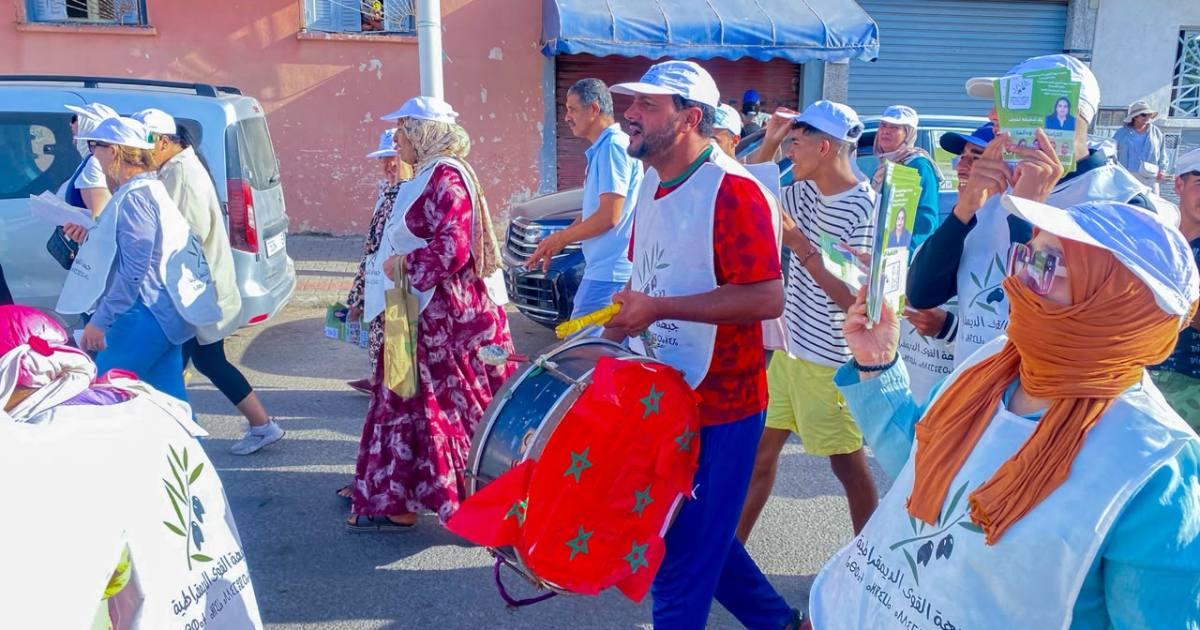
The victory of environmental activist Hamza Khroubby in Morocco's parliamentary race marks a turning point for the youth generation towards official political participation following the wave of protests that swept across the country since September 2025. Khroubby, founder of the Environment and Sustainability Party, hopes to see exceptional engagement from young people in Thursday's National Assembly elections, whether through voting or candidacy, considering that the recent Millennial protests have opened new horizons.
National protests erupted on September 27, 2025, following deteriorating conditions in health, education, and employment, evolving from the town of Ajaïr to include major cities. Protesters, calling themselves the Generation 212 Movement, demanded improved public services and an end to corruption. The unrest resulted in at least three deaths and highlighted the greatest challenge ahead of the elections: youth engagement with political parties after they had previously sought change through street protests.
Activist Aziz Arab Halmi explains that the new generation is no longer ready to accept traditional debate or empty promises, but wants tangible results in daily life, such as quality education and healthcare that preserves dignity. He noted that parties should not wait for election campaigns to respond to these demands, but rather give youth a real place in decision-making and political responsibility.
Young man Mubarak Tawmi attributes part of the youth's negativity toward politics to grandparents' advice to avoid trouble and maintain daily stability, as well as the "200 dirham" mentality linked to old election rewards. Tawmi sees party engagement as one effective way to face these challenges, especially with youth unemployment remaining high at 37.2 percent among those aged 15 to 24 according to the High Planning Commission.
Statistics indicate that more than 15.8 million people are registered to vote in parliamentary elections that will determine seats in the 395-member National Assembly, while young people aged 18 to 24 make up only about four percent of registered voters. In contrast, those over 60 represent more than 29 percent, reflecting a clear demographic gap that could affect election results and their political content.
Halmi emphasizes that Morocco's political system gives the monarchy a central institutional role while elected governments bear responsibility for public policy and legislation; thus, young voters must distinguish between what parties can deliver and what are mere promises. He concludes by reminding that elections are not blank checks but the beginning of an ongoing relationship between citizens and their representatives requiring continuous monitoring and accountability from everyone.
Analysis & context
Analysis & Context
Analytically, this shift from the streets to the parliamentary hall represents a serious attempt to bridge the historical gap between citizens and public affairs. The legislative elections scheduled for September 23 will decide the distribution of the 395 seats in the National Assembly, but data shows that youth (18-24 years) do not exceed 4% of registered voters while seniors lead with 29%.
In a broader context, Moroccan political parties face a major challenge in accommodating the demands of the new generation who reject traditional rhetoric or unfulfilled promises. Moreover, the problem of youth unemployment reaching 37.2% among the 15-24 age group remains a significant economic and political obstacle affecting social stability and the legitimacy of democratic institutions.
Experts point out that Morocco's political system, which grants the monarchy a central institutional role, makes elections a test of parties' ability to offer realistic solutions within the existing constitutional framework. Youth participation also requires them to distinguish between what parties can deliver and what are election slogans with no basis in reality.
Finally, this scene reflects a growing desire among citizens to build a continuous relationship with their legislative representatives based on oversight and accountability rather than considering elections merely as a blank paper where all powers are handed over without subsequent follow-up.