Sourced fact
The News
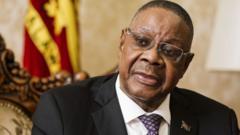
The opposition in Malawi has expressed concern over President Peter Mutharika's extended visit to South Africa, which has been conducted without providing clear details. According to a statement from the Malawi Congress Party (MCP), the country is at a critical juncture requiring decisive action. Moses Kunkwali, the party's campaign director, told media in the capital, Lilongwe: "The issue is not that the president has traveled, but that people are suffering and need assurance that someone is in charge."
A government spokesperson stated that President Mutharika is still managing the country's affairs from South Africa and denied there is a leadership vacuum. The Ministry of Information explained that "the president is always in charge at any time and in any place." The government accused the opposition of politicizing the country's problems, noting that voters had elected their government to address these issues.
Malawi faces significant economic challenges, including a severe foreign exchange shortage that has led to fuel import disruptions and increased transportation costs. Fuel stations have long queues, while hospitals suffer from a lack of medicines and power outages. Despite these difficulties, President Mutharika sent his Minister of Trade to represent Malawi at a COMESA summit in Zimbabwe.
Earlier, the government had denied unconfirmed reports that the president had traveled to India for medical treatment, confirming that Mutharika remained in South Africa. At 86 years old, President Mutharika continues to travel frequently, raising questions about his ability to manage the country in these difficult circumstances.
Analysis & context
Analysis & Context
Analytically, Malawi faces severe economic and social challenges that make the president's extended visit a source of concern for citizens. The economic crisis includes a severe foreign exchange shortage, power outages, and a shortage of medicines, increasing pressure on the government.
In a broader context, many African countries face similar issues due to global and regional economic challenges. Effective political leadership and transparency in addressing these issues have become essential for regaining public trust.
From another perspective, the importance of the opposition's role in monitoring government performance and providing clarity on decisions affecting the country is highlighted. In Malawi's case, the opposition's demand for clarity on the president's visit underscores the need for transparency and accountability in the political system.