Sourced fact
The News
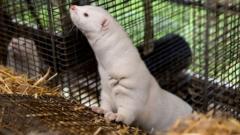
The Danish government has decided to end mink farming in the country by August 2029 after rejecting a European Union ban exemption request for mink farming. Denmark was the world's largest producer of mink fur, but the mink farming industry has declined due to a global ban on farming animals for fur, a decrease in demand for fur, and the spread of a mutated strain of the coronavirus among mink herds. Environment Minister Christian Rasmussen Madsen stated that the decision was made with regard to animal welfare. He said, "Businesses should have meaning for society, the economy, and animals, not just because they have been around for a long time."
In June, the new government decided not to proceed with the previous government's request for an exemption. MP Birgitte Fink Jorgensen noted that the decision was "a good day for animal welfare." Denmark's mink farming industry has been declining in recent years, with China and Poland now the world's largest producers. During the COVID-19 pandemic, the Danish government ordered the culling of around 15 million mink after a mutated strain of the virus was discovered among mink herds, leading to a decline in fur exports from Denmark.
With around 15,000 mink remaining in Denmark, the government will begin closing the seven remaining farms in the country. The costs of closure have not yet been determined, but a spokesperson for the ruling party in the field of animal welfare had previously said that the cost could reach 14 million Danish kroner (approximately £1.56 million). However, the final cost could be higher. The use of fur in fashion has faced significant debate, with fashion houses and magazines refraining from using fur in recent years, but fur has returned to the forefront with celebrities wearing faux fur and vintage fur.
Analysis & context
Analysis & Context
Analytically, the Danish government's decision reflects global changes in the fur industry. The fur trade has become less popular due to environmental and ethical pressures, leading to Denmark's decline as the world's largest producer.
In a broader context, this decision reflects a global shift towards protecting animal rights and the environment. With increasing awareness of animal rights issues, many countries and companies are moving towards reducing the use of animals in industries deemed unethical.
It is also worth noting that the fur industry has faced increasing challenges in recent years, with traditional markets such as China declining and demand for natural fur decreasing. This shift also reflects changes in the fashion market, where the use of fur has become less common among fashion shows and designers worldwide.