Sourced fact
The News
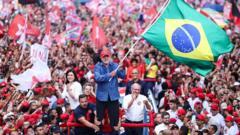
President of Brazil, Luiz Inácio Lula da Silva, in his victory speech, firmly rejected any American interference in his country's affairs, which ignited a strong nationalistic sentiment among Brazilian voters. Although foreign policy was not a decisive factor in the election, Lula's statements against U.S. intervention significantly boosted his popularity.
President Donald Trump commented on the results, stating that he respects Lula but did not support his opponent Flávio Bolsonaro. However, the relationship between the two remained complex, with Trump being a strong ally of Flávio's father, former President Jair Bolsonaro.
In an interview with Lula a year ago, he clarified that there was no communication between him and Trump, and he did not intend to speak with him. Nevertheless, relations between the two countries improved after the U.S. lifted tariffs imposed on Brazil, which were a response to Bolsonaro's impeachment.
Christopher Sabatini, a U.S. studies fellow at Chatham House, noted that Trump had hoped Brazil would become part of the "American Shield" strategy against drug trafficking, but Lula's victory led to a shift in this approach.
Despite the temporary improvement, several issues could lead to future tensions, such as allegations of interference in Brazilian elections and disagreements over the use of military force in the region. Additionally, Brazil's initiatives in technology, such as the instant payment system "Pix," raised concerns in the U.S.
In conclusion, the future of relations between the two countries will depend on how willing the U.S. is to intervene in Brazil's internal affairs and how Lula will handle this intervention.
Analysis & context
Analysis & Context
From an analytical perspective, Lula's victory poses a significant challenge to U.S. policy in Latin America. As the region's largest economy, Brazil's control under Lula means the U.S. will not be able to use Brazil as a tool to achieve its strategic goals. Moreover, Brazil holds the second-largest reserves of rare earth metals in the world after China, making it a strategic target for the U.S. In a broader context, the relationship between Brazil and the U.S. reflects the political and economic tensions in the region. Brazil faces pressure from the U.S. to adopt policies that conflict with its national interests, raising concerns about sovereignty and national autonomy. At the same time, economic ties between the two countries remain robust, suggesting that political tensions may not significantly impact commercial cooperation.