Sourced fact
The News
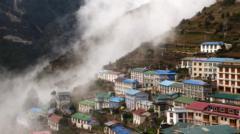
A new study indicates that nearly 300,000 people in parts of the Himalayas may now live within the path of potential disasters due to rapid urban expansion. Research published in the journal Scientific Reports revealed a 45% increase in built-up land in high-risk areas in northern Nepal, southeastern Tibet, and Uttarakhand between 2016 and 2023.
The scientific team, composed of nine researchers from the United Kingdom, Nepal, and India, explained that urban expansion was significantly faster in areas prone to glacial lake outburst floods, rising by as much as 78% over the same period. Conducted prior to the devastating August floods that killed more than 1,400 people in Nepal, the study examined regions extending up to 50 kilometers downstream of Himalayan rivers and around 1,360 glacial lakes.
Dana Raj Acharya, Mayor of Pokhara, stated that managing the risks posed by the Seti Gandaki River is a huge challenge, noting that many old buildings are located merely five meters from the riverbank despite new regulations. A hotel owner near the Modi River also expressed ongoing concern about potential floods if ice melts or glacial lakes explode, saying they live in constant fear.
Experts like Khagendra Bhandari point out that tourism investors promote these destinations without considering the risks, while the head of the Pokhara Hotel Association admitted that commercial expansion occurred "without any proper planning." The study also warns that current development decisions will create disaster risks for decades to come, as rising temperatures accelerate glacier melting at twice the global average rate, turning glaciers into explosive lakes.
In a recent address to the UN General Assembly, Nepalese Prime Minister Pushpa Kamal Dahal (also referred to as Balendra Shah in some contexts) stated that every major disaster wipes out years of development and forces poor countries to borrow money to repair damages they did not cause. Nepali officials acknowledge they are addressing these issues by preventing new settlement within 15 meters of riverbanks in recently affected corridors.
Analysis & context
Analysis & Context
From an analytical perspective, the rapid urban expansion in glacial valleys represents a stark contradiction between economic needs and human survival versus lethal environmental risks. While tourism and hydroelectric power investment drive the construction of hotels and power stations along riverbanks, accelerating glacier melt due to rising temperatures threatens to trigger glacial lake outbursts and cause devastating floods.
In the broader context, data indicates that the Himalayan region is warming at twice the global average rate, which accelerates the melting of glaciers and snow, leading to instability in mountain slopes also affected by earthquakes. This combination of factors creates an ideal environment for frequent and severe natural disasters, where rivers once a source of life have turned into channels of deadly debris and silt.
Furthermore, weak enforcement of building codes and environmental regulations represents a major obstacle to mitigating these risks. While theoretically there are prohibited zones for construction near riverbanks, reality on the ground shows neglect of these laws in favor of haphazard economic growth. Reports from Nepali officials confirm that relocating residents in hazardous areas faces significant social and psychological challenges due to people's attachment to their land.
Finally, there is an urgent need for more effective early warning systems and international coordination to face these disasters. Studies indicate that development decisions made today will shape disaster risks for decades to come, necessitating a reevaluation of urban planning priorities in sensitive mountainous regions.