Sourced fact
The News
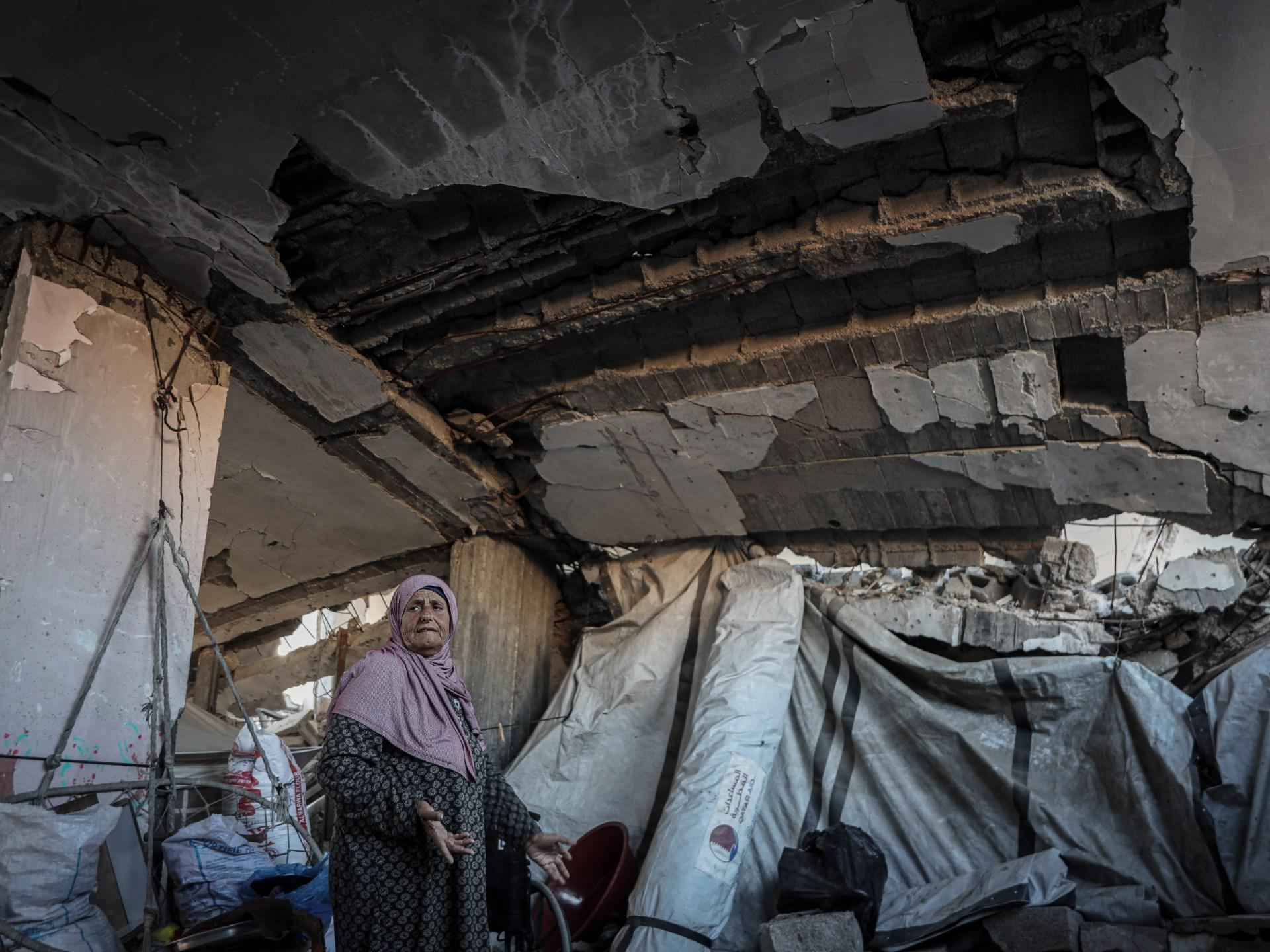
Families in the Gaza Strip face a severe human predicament that forces them to live within damaged buildings threatened with collapse due to the lack of safe housing options and Israeli occupation restrictions. Reports reveal that over 371,000 residential units have been destroyed or damaged, raising reconstruction costs to more than $71 billion over the next decade. In Gaza, where the occupation has prevented proper rebuilding for approximately three years, families find themselves trapped between the danger of collapse and a lack of material alternatives.
Mas'ada Abu Jarad lives in an apartment in Gaza City whose roof is partially collapsed, made of broken concrete and twisted iron columns. She has set up a tent under the open section of the room exposed to aerial elements after warnings from the Palestinian Red Crescent and civil defense about the location's danger. Mas'ada says she has no options to leave because the occupation prevents her from finding rental alternatives, especially since she is from Lahya in northern Gaza, which she can no longer return to.
In Ramal neighborhood south of Gaza City, Abdullah Abu Hajj lives with his family of seven inside a six-story building severely damaged and bearing municipal advertisements warning of its potential collapse. Abdullah explains that he remains awake all night listening for any unfamiliar sound that might indicate movement in the concrete or falling columns; although his children have adapted to the danger, fear has not faded.
Islam Hassan suffers from increasing fears while living with her family of five in a single room on the third floor of a tilted building filled with debris, where the sewage system does not work, forcing them to use an outdoor toilet. Islam says she will leave as soon as a safe place and tent become available, but reality lacks these possibilities. She notes that the coming winter poses a greater threat as rainwater enters through exposed roofs and weak structures.
The UN Office for the Coordination of Humanitarian Affairs indicates that thousands are hiding in unsafe buildings because better housing options are unavailable, while UNICEF estimates that 84% of Gaza's population lives in crowded or damaged shelters that do not protect them from cold and floods. Islam adds that the war has forced families to endure risks they never imagined before, saying fear resides in everyone but they stay because they have no choice other than leaving it to God.
Analysis & context
Analysis & Context
From an analytical perspective, these stories reflect a widespread humanitarian crisis in Gaza, where 76.6% of residential units were destroyed or damaged according to a joint assessment by the UN, the World Bank, and the European Union as of October 2025. Estimates indicate that rebuilding the sector will require more than $71 billion over the next decade—a huge amount for which resources are not currently available to finance it.
In the broader context, the ban on entry of essential materials such as tents and plastic sheets is part of an Israeli policy that restricts aid delivery and deepens human suffering. This ban turns Gaza into a zone of international indifference, causing residents to lose their ability to adapt to harsh conditions, especially with the approaching wet and cold winter threatening to increase collapse risks.
Data show that over 1.76 million people—about 84% of Gaza's population—live in crowded shelter sites or damaged buildings unable to protect them from cold and floods. These figures confirm that the housing crisis has evolved into an existential threat endangering local community stability and residents' ability to survive with dignity.
Finally, international indifference and the inability of humanitarian organizations to operate freely exacerbate suffering and demonstrate the failure of international mechanisms to protect civilians and provide their basic rights to safe housing and human dignity.