Sourced fact
The News
Emergency meetings were held by the French government on Monday to discuss the violence and looting that occurred over the weekend, described as some of the worst cases of public disorder in modern French history. The protests, which gathered more than half a million people on Saturday, were initially peaceful demonstrations against rising living costs and a lack of public services. However, the situation deteriorated when groups of troublemakers emerged, leading to violent clashes. According to estimates, around 1,500 shops and businesses were looted and damaged, resulting in approximately 1,000 police injuries, seven of them in critical condition.
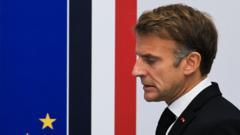
French President Emmanuel Macron delivered a televised address on Sunday, calling for unity among the French people and promising to punish those responsible for the violence. However, his speech was heavily criticized on social media and by political opponents for not providing concrete details on how to handle the crisis. Sophie Binet, general secretary of the CGT union, accused Macron of failing to address students' concerns and the country's economic and social issues.
French National Assembly President Yaël Braun-Pivet expressed her desire to open an investigation to determine exactly what happened over the weekend and why. According to one passerby, people feel frustrated that politicians are focusing on exchanging blame rather than addressing the real issues facing the country. Marine Le Pen, the far-right presidential candidate, noted that the current government is unable to handle the crisis.
As the French presidential election approaches in six months, Macron faces significant political and economic challenges. Expectations are that various political parties will exploit the current crisis to draw attention and bolster their positions. However, the French government hopes for a period of relative calm during the upcoming school holiday, but anticipates large protests returning on November 5th.
Analysis & context
Analysis & Context
From an analytical perspective, President Emmanuel Macron is under significant political pressure due to the current crisis. Many French people view Macron as a weak president, with candidates from the right and left competing to replace him in the upcoming presidential election. The French government faces challenges in balancing security measures with avoiding further public outrage through harsh actions. Additionally, the French economy is struggling with increasing public debt and pressure from investors to control spending. In a broader context, these events reflect deep social and political tensions in France, where political parties are competing to interpret recent events and blame each other for the situation.