Sourced fact
The News
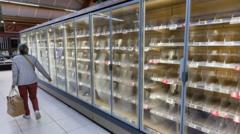
France has accused Iran of being behind cyberattacks that caused the temperature in fridges and freezers inside hundreds of supermarkets to rise, resulting in the spoilage of vast quantities of fresh and frozen food valued at millions of euros. French Foreign Minister Jean-Noël Barrot stated that the attack carried out by Iran's Revolutionary Guard was unprecedented in its scale and aggressive nature, affirming that his country would apply European sanctions against all those responsible for these acts.
Barrot clarified that this attack represents the first large-scale cyber operation aimed at sabotage on French soil, describing it as a "major attack on the nation's interests and the security of the French people." He also noted that the Iranian ambassador in Paris has been summoned to lodge a very strong protest against this extremely dangerous act.
In related developments, the Paris public prosecutor's office reported that an official investigation has been launched against the head of the offensive cyber unit of Iran's Revolutionary Guard, known as "Shahid Kaveh," along with his deputies, based on information linking the unit to the Guard's Electronics and Cyber Center. Sources indicated that the attacks targeted software from the Danish company Danfoss, which manages remote cooling units in large supermarkets such as Carrefour, Monoprix, and E.Leclerc.
The attack, which occurred on October 11, affected more than 100 stores belonging to Coopérative U group, while another 80 stores from the Intermarché and Netto networks were also impacted, with some fridges reaching temperatures of 50 degrees Celsius during the night. A second wave of attacks spread last week, involving more than 100 stores in seven other European countries, including Belgium, Luxembourg, Sweden, Ireland, the Netherlands, Estonia, and Finland.
Barrot stated that the French government will take any necessary and proportionate measures to respond to the incident and deter any party from attempting to repeat such acts in the future. The French government has not announced how it reached the conclusion that Iran is responsible, noting the difficulty of attributing cyberattacks specifically due to their ability to hide their locations.
Analysis & context
Analysis & Context
From an analytical perspective, this incident represents a dangerous precedent in the world of cybercrime, where attacks have shifted from targeting traditional digital infrastructure to assaulting direct physical systems such as industrial refrigeration units, thereby threatening the food security and economic stability of targeted nations.
In a broader context, this incident emerges as part of escalating geopolitical tensions between France and Iran, with Paris using the attack as a tool to elevate international sanctions against Tehran, while Iran attempts to maintain ambiguity around the identity of the actual attackers to avoid diplomatic isolation.
Reports also indicate that companies like Danfoss, which provide software for controlling cooling systems, may be strategic targets for attackers due to their vital role in global supply chains, making any breach of such systems a global threat requiring intensive international cooperation.
Finally, the challenge of identifying cyberattackers remains extremely complex due to hackers' capabilities to hide their true locations, rendering reliance on digital evidence alone insufficient for issuing definitive judgments in such sensitive cases.