Sourced fact
The News
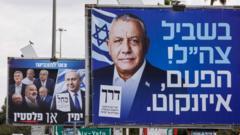
Israeli Prime Minister Benjamin Netanyahu will remain as the leader of an interim government until a new cabinet is formed, while opposition leader Gadi Eisenkot seeks to assume power following his party bloc's narrow victory in the recent elections.
Eisenkot faces a significant challenge because his bloc, comprising four parties, secured 48 seats compared to Netanyahu's bloc which holds 53 seats, meaning both sides are far from the majority needed to form a stable government. President Isaac Herzog has tasked Eisenkot with forming a government within 28 days, with the possibility of extending the deadline by an additional two weeks, while nearly half of the new Knesset members have not served in the previous parliament.
Eisenkot stated that any party or Knesset member willing to accept four principles can join his proposed government, provided recognition of Israel as a Jewish and democratic state, acceptance of the Declaration of Independence's values, and support for mandatory military service for all citizens, including currently exempt communities. He added that these principles also require recognizing Hamas as a terrorist organization and committing to dismantling its military and administrative capabilities, which may pose an obstacle for some potential partners.
The political landscape highlights the performance of Arab party coalitions, which secured 19 seats between them for the first time following increased voter turnout among Arab voters, granting them the ability to balance political forces despite Netanyahu's refusal to govern with them and three parties from Eisenkot's bloc. The United Arab List, which won eight seats, expressed readiness to join a coalition led by Eisenkot, while the Joint List offered external parliamentary support.
Conversely, Eisenkot faces difficulty persuading other members of his bloc to join a minority government relying on Arab party support, as Avigdor Lieberman has so far refused to join such a government. Additionally, more religious Jewish parties that won 13 seats may demand significant changes to the conscription system as a condition for joining, which most members of Eisenkot's bloc may not accept.
On his part, Netanyahu reiterated in a video posted on Monday his call to form a national unity government that he would lead as chief leader, warning against any government based on what he described as "Islamists," indirectly referring to Arab parties. He also warned against forming a government with Hamas supporters, affirming that any Zionist party supporting Israel as a Jewish state, including opposition parties, is eligible to participate in the new government.
Analysis & context
Analysis & Context
From an analytical perspective, this scene represents a historic turning point in Israeli politics, where the Knesset transforms into a more diverse body with Arab parties entering the political arena significantly for the first time at this scale. Arab parties representing approximately 20% of the population have become crucial in balancing forces within the new parliament, fundamentally changing traditional government formation dynamics.
In the broader context, election results indicate that Arab voters participated in record numbers, reflecting a fundamental shift in Israel's demographic and political landscape. This change has created a state of political uncertainty as Netanyahu continues his interim role while various parties attempt to form complex coalitions transcending traditional divisions.
It is observed that the dispute over mandatory military service remains one of the most contentious issues, where hardline religious parties reject any change to the current status allowing full-time study in religious institutions for men from strict Jewish denominations instead of military service. Similarly, the stance on Hamas and Arab parties represents a major point of disagreement among different political blocs within the new Knesset.
The future of Israel's new government appears to depend significantly on the ability to overcome these deep divisions and form unconventional coalitions that may require substantial concessions from all concerned parties to ensure national stability amidst changing circumstances.