Sourced fact
The News
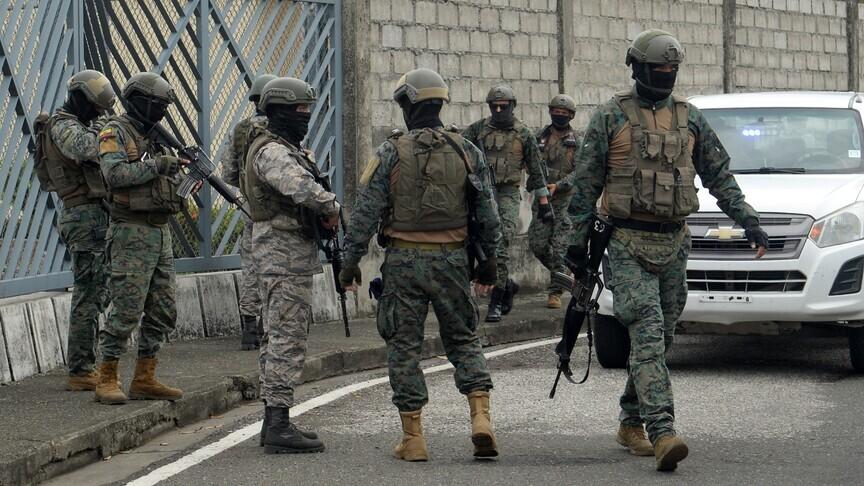
The Ecuadorian Ministry of Interior announced via the social media platform "X" that it has carried out a major arrest operation involving more than 30 Ecuadorian nationals suspected of belonging to a group directly linked to the Mexican "Jalisco New Generation" (CJNG) cartel. This operation, executed early on Thursday, was conducted with direct assistance from US forces and their law enforcement agencies, according to Ecuadorian Interior Minister John Raímburg.
Approximately 320 Ecuadorian police officers participated in the operation, along with 50 personnel from the Southern Command of the US military. The raids targeted logistical routes used by the cartel across several Ecuadorian cities. Raímburg noted that the involved group primarily operates by transporting cocaine coming from Colombia—the world's largest producer of cocaine—through ports in southwestern Ecuador to multiple international destinations.
In a related development, right-wing President Daniel Noboa emphasized during his address to the UN General Assembly on Wednesday that his country faces significant criticism regarding its efforts to combat organized crime, while attention to the victims of these criminal groups is increasingly being overlooked. He also pointed out that Ecuador has transformed in just a few years from one of the safest countries in South America into a major hub for cocaine trafficking under the influence of powerful criminal gangs with ties to Mexican and Colombian cartels.
Analysis & context
Analysis & Context
From an analytical perspective, this operation is part of a broader strategy adopted by the United States and its allies in Latin America to counter the rise of cross-border organized crime supported by countries such as Mexico and Colombia. The participation of US forces and the Drug Enforcement Administration (DEA) highlights intensified security cooperation between Washington and its partners, particularly under President Donald Trump's administration, which prioritizes combating criminal gangs on the continent.
In the wider context, Ecuador's transformation from a relatively safe state into a central node for drug trafficking poses a fundamental challenge to regional security. Criminal groups have exploited geographical and political gaps to move cocaine through southern ports. This shift reflects the weakness of traditional security structures against organized crime networks possessing advanced resources and technologies, necessitating joint military interventions such as those previously seen on Ecuadorian coastlines.
Furthermore, President Noboa's political rhetoric underscores tensions between intensive security efforts and international or domestic criticisms that some entities may direct toward anti-crime policies, making the management of the country's international reputation a crucial element in sustaining foreign support and security assistance.
Finally, the growing reliance on US intelligence and joint operations indicates a shift in the regional security model where recipient states are transitioning from merely being security partners to operational sites within a wider drug-fighting network, thereby altering the dynamics of sovereignty and internal security in these nations.