Sourced fact
The News
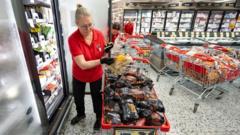
A new cyberattack targeted the freezers and refrigerators of dozens of supermarkets in seven European countries, causing temperatures to rise and forcing many stores to discard millions of euros worth of spoiled food. Subzero, a Belgian company that produces some of the affected appliances, stated that the attacks were executed by remotely switching oven cooling units into defrost mode—the same method used in a previous attack on hundreds of French supermarkets last month.
Stéphane Moulans, CEO of Subzero, which operates Delhaize systems, explained that the attack resulted from exploiting a security vulnerability requiring physical modifications rather than just software updates to protect freezers from such incidents repeating. He noted that the simplest solution is managing freezers via secure internet connections, an approach adopted by most customers after the French attack in early October.
Temperatures in some European stores' freezers reached as high as 50°C (122°F), necessitating temporary closures and subsequent reopening once the situation was contained. The identity of the attackers has not yet been determined, while U.S. and French authorities are conducting joint investigations to determine if there is a link between these attacks and similar incidents involving U.S. military bases in August of last year.
The victims included approximately 40 Delhaize stores across Belgium and Luxembourg, along with fewer locations in Sweden, Ireland, the Netherlands, Estonia, and Finland. The Delhaize branch in Hoelare, northern Belgium, lost products valued at €100,000 without accounting for losses from store closures.
Carrefour France was also affected, stating that only 15 of its stores in Belgium were impacted, while Colruyt Group confirmed that five of its stores were targeted. In Sweden, several stores belonging to IKEA and Coop networks were affected; the Coop branch in Sigtuna reported a breach of freezer software that raised temperatures to 50°C before reopening for customers.
Analysis & context
Analysis & Context
From an analytical perspective, this incident highlights the massive security risks associated with connecting household and commercial appliances to global internet networks. Devices previously designed to operate offline have now become strategic vulnerabilities exploitable via malicious software to disrupt critical infrastructure in the retail sector.
In a broader context, this attack represents a fundamental shift in the nature of cyber threats—from merely stealing financial data to directly disrupting physical operations that impact food safety and consumer well-being. Remote control over freezers allows attackers to destroy goods without needing physical access to the site, significantly raising the cost of attacks on both companies and consumers.
Furthermore, increasing reliance on remote software updates for managing these devices makes it essential to develop physical security protocols alongside digital protection. The recent attack demonstrated that some vulnerabilities cannot be closed through software alone, necessitating hardware redesign or the addition of physical cut-offs to prevent unauthorized control.
Finally, coordination among national and international security agencies has become crucial given the cross-border nature of these attacks targeting multiple countries simultaneously. Effective response requires sharing information about vulnerabilities and threats between nations to ensure protection of shared digital infrastructure.