Sourced fact
The News
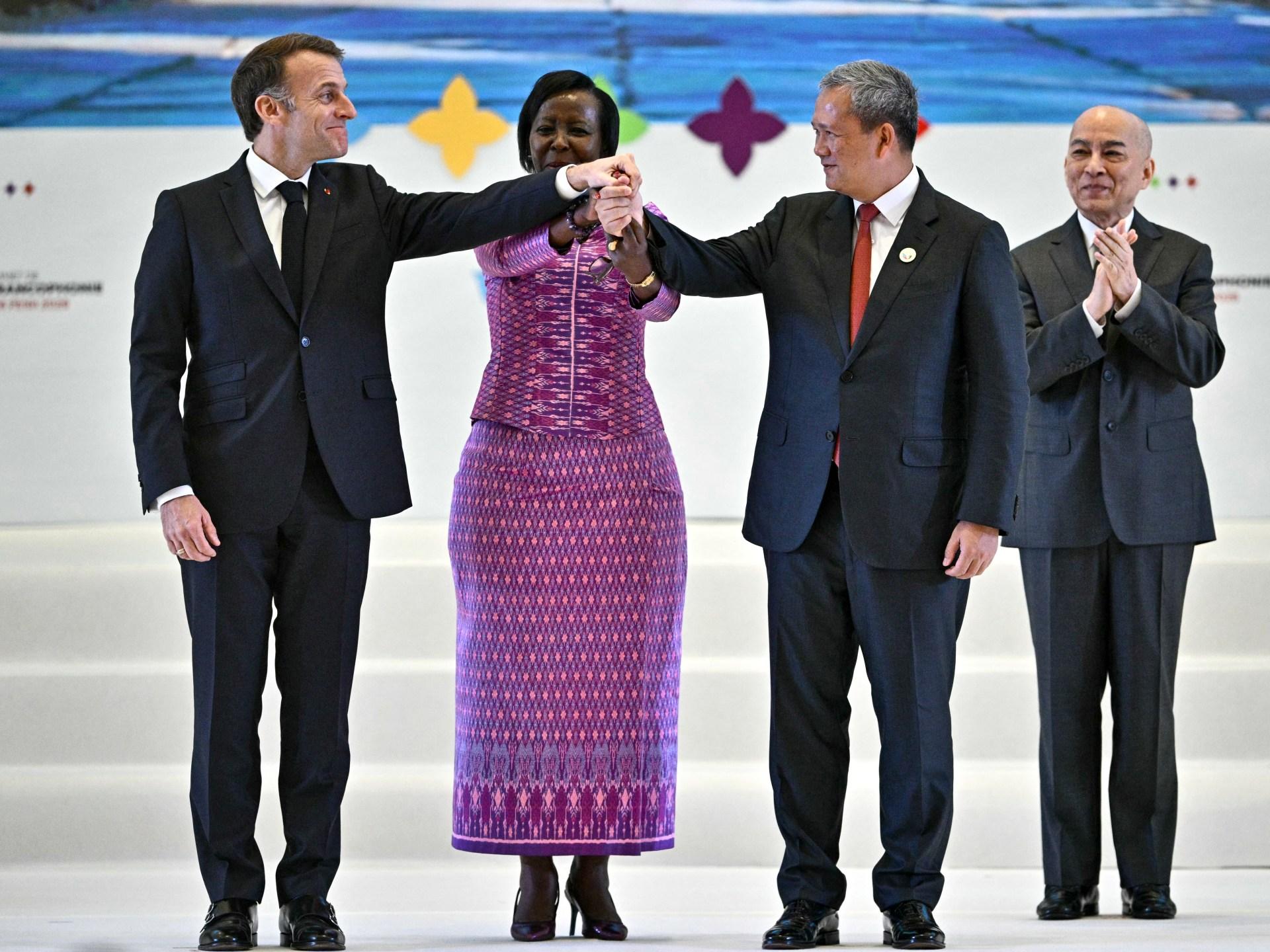
The International Organisation of the Francophonie (OIF) faces a threat of division amid a sharp dispute between the Democratic Republic of the Congo and Rwanda over the nomination of leaders for the forum, while the capital city Phnom Penh in Cambodia hosts a three-day summit today. This summit is an opportunity to elect a new Secretary-General for the organization for a four-year term, but geopolitical tensions threaten to split its 90 members in this rare union comprising 53 full member states.
The meeting sees the presence of about 20 leaders, including French President Emmanuel Macron, Rwandan President Paul Kagame, and Democratic Republic of the Congo President Félix Tshisekedi. Macron arrives after presiding over the previous summit in 2024 to assume temporary presidency until handing it over to Cambodia. Several personalities are competing for the Secretary-General position; Lwazwi Musikibabo of Rwanda, who has held the post since 2018, seeks a third term, while the DRC withdrew its nomination to support a Romanian candidate to achieve a consensus.
The Democratic Republic of the Congo accuses Rwanda of supporting the M23 armed group in eastern territory, which Kigali strongly denies, prompting Kinshasa to threaten leaving the organization if Musikibabo is re-elected again. Experts fear that the departure of the largest French-speaking country officially, which includes more than 110 million people, would deal a major blow to the organization, which already lost Mali, Niger, and Burkina Faso in March last year.
UN Special Rapporteur Tom Andrews has called on attendees to demand the release of activists detained in Cambodia, emphasizing that no one should be detained for defending human rights or expressing critical opinions. In contrast, activists see the summit as an opportunity to pressure Cambodia, a de facto single-party state, over respecting rights, while Macron faces widespread protests within France before his visit to the Angkor World Heritage site on Monday.
Analysis & context
Analysis & Context
From an analytical perspective, this gathering represents a critical moment for the Francophone Union, which is suffering from unprecedented internal fissures threatening its structural collapse. The DRC's threat of withdrawal is not merely a routine measure but a reaction to a fundamental disagreement regarding regional security in East Africa, where Rwanda is accused of supporting armed groups on Congolese soil, deepening the rift between the two countries.
In the broader context, the importance of an organization comprising linguistically and culturally diverse states stands out amidst increasing geopolitical challenges affecting the stability of the Arab and African worlds. The loss of membership from a major country like the Democratic Republic of the Congo, which is the largest French-speaking country where French is an official language, would deal a major blow to the credibility and international influence of the organization, especially with recent withdrawals by West African nations.
Furthermore, President Macron's visit to Cambodia comes at a time when France faces widespread domestic protests, making this summit an attempt to redirect attention toward international issues and enhance France's role in the African region despite internal and external challenges facing Paris.