Sourced fact
The News
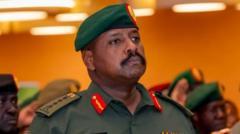
In Uganda, senior military officers, including former generals, face arrest without their ranks offering any protection from the wrath of General Muhoozi Kainerugaba, the Army Chief and Commander-in-Chief. More than ten generals and senior officers have been detained over the past fifteen months in a campaign that has caused significant disruption within the top military command. This escalation coincides with growing political tensions over who will succeed President Yoweri Museveni, who has ruled the country for four decades, while 52-year-old General Muhoozi Kainerugaba is seen as a potential presidential candidate.
The arrests appear aimed at isolating officers opposed to the General's presidential ambitions amidst divisions within the ruling National Resistance Movement party, whose leadership has denied reports of rejecting support for him as the President's successor. Speaking to BBC News, political expert Gerald Baribae explained that senior officers believed not to support Muhoozi's project have been detained or imprisoned and accused of corruption and treason. He also noted that some accusations were widely perceived as politically motivated, reflecting growing divisions within the military over the issue of presidential succession.
The arrest of former Lieutenant General Peter Eliwelo stands out as one of the most prominent cases highlighting this campaign. The armed forces detained him on November 2 under charges alleging he planned to destabilize the Eastern Region of Tororo. General Muhoozi Kainerugaba posted a statement on X stating that he "stripped traitor Peter Eliwelo of his rank and demoted him to Corporal," but Ugandan media outlets noted that military regulations do not allow a senior officer to remove another officer's rank via a social media post. Eliwelo's detention was later confirmed after weapons and military equipment linked to him were recovered, while his family rejected the charges against him.
The charges brought against detained officers have varied, including intelligence forgery, espionage, and stealing military fuel. Three former heads of the military intelligence were arrested, including Lieutenant James Beringe, who was released after the General declared a "pardon" for him. Analysts believe these arrests may be part of broader security investigations to protect witnesses and demonstrate seriousness in fighting corruption, while others see them as a comprehensive purge affecting active officers and contractors considered opponents of General Muhoozi Kainerugaba.
Analysis & context
Analysis & Context
Analytically, tensions are concentrated between two powerful institutions: the military, where Muhoozi exerts significant influence, and the ruling party (National Resistance Movement), where his political ambitions appear divided among top figures. Recent leadership meetings of the party ended without agreement on nominating Muhoozi as Museveni's successor, according to AFP, which cited party sources stating that voting was abandoned after objections from several members to the proposal.
In a broader context, Dr. Gerald Baribae, an Ugandan political scientist working at York University in Canada, sees a link between the arrests and political maneuvering around presidential succession known as "Muhoozi's project." He points out that senior officers believed not to support the project have been arrested or detained and accused of corruption and treason. He also notes that some detainees were released after receiving forgiveness from the General, while others remain in prison.
These events raise questions about the independence of military courts and their ability to deliver fair trials, as Baribae observes that many Ugandans believe the charges are politically motivated and expect limited justice. He also points to divisions between special forces loyal to the President's son and army leaders who have not yet been convinced by Muhoozi's nomination.