Sourced fact
The News
Dr. Marta Shahbazi, an award-winning university researcher and author, died in a deadly Spanish train crash that claimed her life while she was traveling to attend the ceremony for the Scientific Excellence Awards. The incident occurred on Wednesday near Orda, south of Madrid, when a high-speed train operated by Renfe collided with another stationary train, resulting in the deaths of at least 69 people among more than 540 passengers on board the trains.
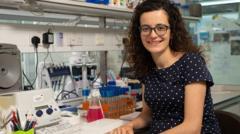
Shahbazi, who was a mother to two children, worked as an associate professor in the Molecular Biology Laboratory (LMB) at Cambridge's Medical Research Council (MRC), where she led a research group and is renowned for her pioneering work in cell biology and early human development. She had been named by the Spanish Society of Biological Development as a recipient of an award for her contributions to the study of early human evolution, an honor she was scheduled to receive at a conference held in El Rompido in the Andalusia region.
In a statement released by the laboratory, they described her death as a "deep shock and immense loss" to the scientific community, affirming that she was an inspiring, talented, and passionate scientist whose research contributed to understanding the first steps of human embryonic development and how errors lead to pregnancy failure. They also praised her as a role model for working mothers who balance their professional and family lives, a description she had once used to describe herself.
Professor Bertie Gootjes, director of the Stem Cell Institute at Cambridge University, stated that the institute's community was "deeply shocked and saddened" by her passing, noting that she led her main research group in the laboratory alongside her academic roles at the institute. He added that her creativity, passion, and generosity would be deeply missed by everyone, considering her a highly respected figure due to the collaborative spirit that distinguished her groundbreaking research.
Her death was first confirmed via a social media post from CiMUS Center in Santiago de Compostela, where her aunt works, while Spain declared three days of national mourning following this disaster, which ranks as one of the worst railway disasters in modern European history.
Analysis & context
Analysis & Context
From an analytical perspective, this incident represents a painful blow to the international scientific community, especially since Dr. Shahbazi was working on sensitive research related to very early stages of human embryonic development and how errors lead to miscarriage. Losing a researcher with such capabilities at a relatively young age constitutes an irreplaceable loss for science and for deep understanding of life mechanisms and genetic diseases.
In the broader context, this train disaster stands as one of the worst railway accidents in modern European history and the deadliest in Spain since 2013. The Spanish government declared three days of national mourning to honor the victims, reflecting the magnitude of social and psychological impact such disasters have on European societies.
It is worth noting that Dr. Shahbazi worked at a laboratory affiliated with the National Institute for Medical Research (MRC) in Cambridge, a world-leading center in molecular biology. Her connection to major research centers like the Stem Cell Institute in Cambridge highlights the role of international researchers in scientific collaboration that transcends national borders.
Finally, this news story illustrates how scientific life is filled with unexpected dangers, as Shahbazi was on her way to receive international recognition for her scientific efforts just moments before her death. Referring to her as a "scientist mother" highlights the challenges faced by female researchers in balancing scientific responsibilities and family duties—a topic that is always raised within academic circles.