Sourced fact
The News
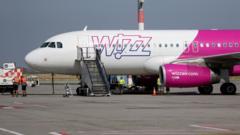
A passenger flight operated by Vueling from London Luton Airport to Sofia was forced to make an emergency landing in Budapest after receiving a bomb threat mid-air. The airline confirmed that Hungarian authorities conducted comprehensive security checks on the aircraft and its passengers. Additionally, the Hungarian Minister of Defense stated that a Gripen fighter jet escorted the flight for protection until it reached the ground.
A spokesperson for Vueling reported that the security inspection was completed with no suspicious items found, allowing the plane to resume flying soon. The official added that the company is fully cooperating with authorities and that the safety of passengers and crew remains its top priority throughout this crisis.
On his part, Hungarian Defense Minister Romulus Rosen-Zindel clarified that the aircraft requested permission to land at Budapest Airport immediately upon receiving the threat. He noted that a Hungarian Air Force fighter jet ascended into the sky within minutes to provide protection before returning to its base after handing over the mission to police forces.
According to flight tracking website "FlightAware," the plane was scheduled to arrive in the Bulgarian capital at 13:25 Budapest time but landed early at Budapest Ferenc Liszt International Airport at 12:09. After landing, the aircraft moved to a designated tarmac where security inspections continued under the supervision of relevant authorities.
Analysis & context
Analysis & Context
From an analytical perspective, the swift military intervention by the Hungarian Air Force exemplifies the advanced security protocols adopted by European nations to counter terrorist threats or unspecified risks in airspace. This incident illustrates how regional defense alliances can ensure the continuity of civil aviation operations even during acute emergencies.
In a broader context, low-cost carriers like Vueling remain a vital component of Europe's transportation network, making the protection of their flights a top priority for both local and international governments. This incident highlights the importance of coordination between airport authorities and defense ministries to ensure a rapid and effective response when potential threats are reported.
Furthermore, the use of fighter jets to escort civilian aircraft during emergencies reflects an evolution in air security strategies, where military capabilities are integrated with civil operations to protect lives and property without causing significant disruption to public order or flight schedules.