Sourced fact
The News
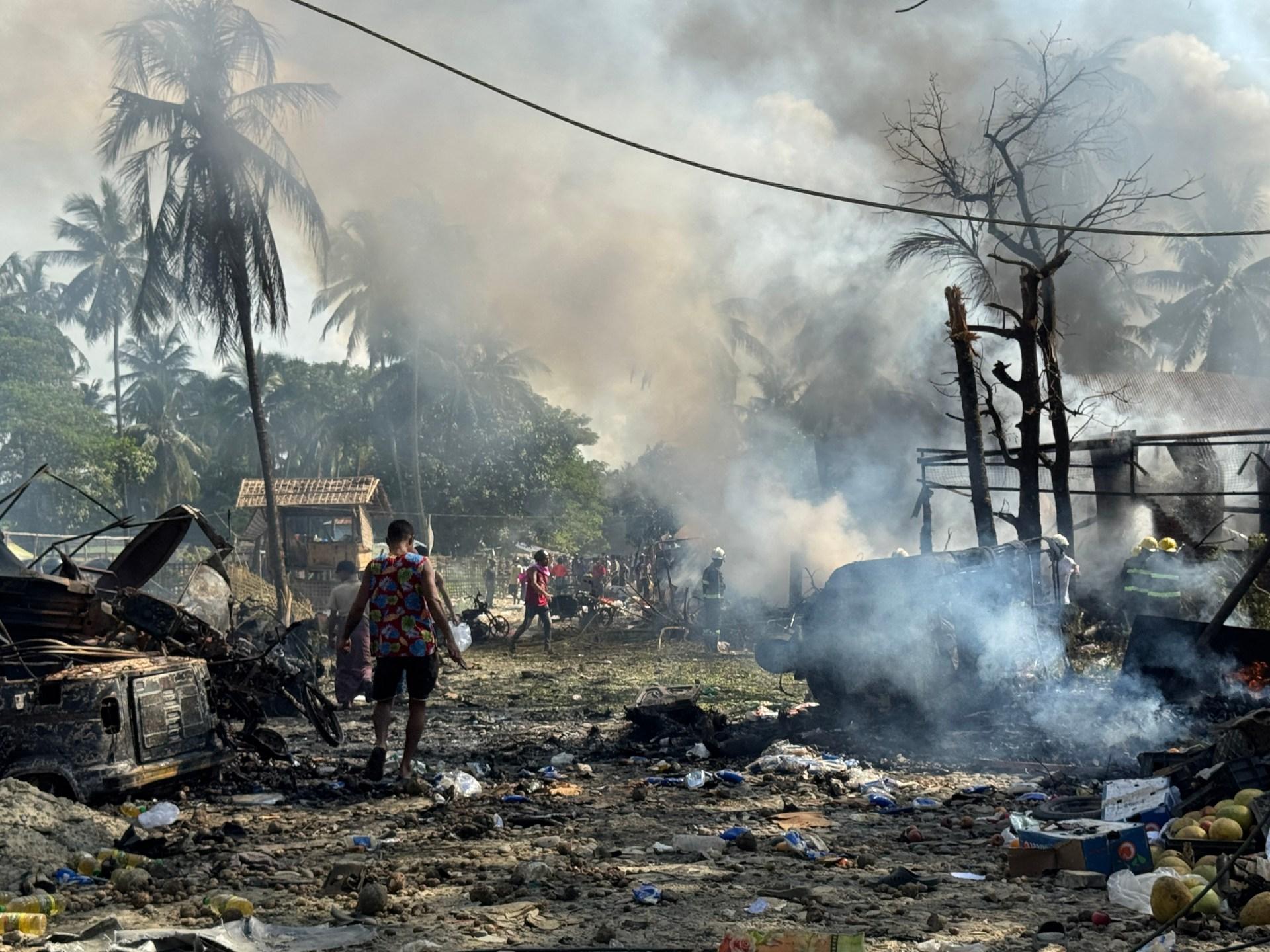
A Burmese army airstrike has killed at least 33 people in an area controlled by rebel factions in Rakhine state in western Myanmar. The attack occurred near a market in the town of Kyauktaw at noon local time (0530 GMT) on Monday, also injuring 36 people, according to rescue team officials and rebel groups. The Arakan Army stated that a military aircraft dropped two bombs near the market, and the death toll could be higher.
Win Htun Aung, a rescue team official in Rakhine, confirmed the details to the Associated Press. He said the market was a major trading center in the area, attracting traders and shoppers from all over the state. He added, "This is one of the most severe air strikes in Rakhine." Social media posts showed buildings on fire and people running for safety.
Since the 2021 coup that ousted the democratically elected government led by Aung San Suu Kyi, conflicts have intensified in Myanmar between the army and armed groups and the democratic opposition. In April of this year, General Min Aung Hlaing was elected president, solidifying military control over the country. Since November 2023, the Arakan Army, which seeks autonomy for the Rohingya ethnic group in Rakhine, has been carrying out attacks and has seized control of several key military centers.
The ongoing conflict has restricted army-controlled trade routes to Rakhine, exacerbating food shortages in the region. In December, another airstrike on a hospital in the town of Maungtaw in Rakhine killed 33 people and injured 70 others. According to UN data, around half a million people have been displaced due to the conflict in Rakhine. The UN also noted that human rights in Myanmar have declined to a "new low level" due to "violent abuses" against the Rohingya and the devastating impact of illegal economic activities.
Analysis & context
Analysis & Context
Analytically, this attack is part of the ongoing conflict in Myanmar since the 2021 military coup. Continued airstrikes reflect the army's strength and its efforts to suppress resistance. At the same time, rebel groups face significant challenges in defending their areas and protecting civilians.
In a broader context, Myanmar faces a severe humanitarian crisis due to the ongoing conflict. The displacement of around half a million people in Rakhine and food shortages due to trade restrictions imposed by the army highlight the impact of the conflict on civilians. Additionally, human rights organizations like the UN document human rights abuses in Myanmar, indicating a significant deterioration in the humanitarian situation.
In the military context, the use of drones has become part of the conflict, with both the army and rebel groups employing this technology in their attacks. This development reflects advances in military tactics and increases the complexity of the conflict.