Sourced fact
The News
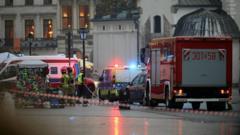
Six people were killed and dozens more were injured in a random shooting attack that took place this morning in the main square of Polish city Krakow, the country's second-largest city. The attack began before 3 PM local time when a man drove his car into the center of the square and started firing randomly at people from inside his vehicle.
Police clarified that the attacker was a Polish citizen dressed in clothing resembling military fatigues and carrying a military-style weapon; several weapons and ammunition were found in his car. Police were injured during their attempt to arrest him: one officer suffered serious wounds after being shot three times while stopping the suspect, according to a Polish minister.
Six people were killed, including four women and two men, and at least 15 others were wounded, including two police officers. Footage documented the moment an officer confronted the suspect on the ground before shooting him multiple times; the officer later fell to the ground mortally wounded.
City officials have urged residents and tourists to avoid the area as investigations continue into the background of the incident, with no motive yet announced. The US Ambassador to Poland described the attack as "barbaric and cruel," while EU High Representative Josep Borrell stated that this tragedy will have a wide-ranging impact beyond Poland's borders.
Prime Minister Donald Tusk said he was on his way to Krakow to announce details of the situation later on Saturday, while President Karol Nawrocki expressed deep concern and awaited a full explanation regarding the circumstances of these tragic events. Eyewitnesses described the scene as horrifying: people rushed out of the main church while more than 20 gunshots were heard simultaneously, resembling different types of firearms.
Analysis & context
Analysis & Context
Analytically, the attack in Krakow's main market square represents a serious threat to public security in one of Central Europe's most important historical and cultural cities. Located at the heart of Polish history, Krakow is a major tourist destination, making it a potential target for terrorist or random attacks aimed at instilling fear.
In the broader context, the swift responses from Prime Minister Donald Tusk and President Karol Nawrocki underscore the importance of maintaining political and social stability in the country following such tragic events. The international community's engagement, including from the European Union and the United States, reflects global concern for security conditions in Poland and Europe as a whole.
The details of the attack—the use of military-style weapons and clothing resembling uniforms—may suggest an organizational background or undisclosed alliances behind the incident. This aspect calls for in-depth investigations to understand potential links between the attacker and any groups or networks.
Finally, the injuries sustained by Polish officers while attempting to stop the attacker highlight the risks faced by security forces during responses to individual or mass attacks. Such incidents confirm the need to enhance rapid-response protocols and train security teams on handling these complex situations.