Sourced fact
The News
Protest activity in France continues to show few signs of de-escalation two months after high school students took to the streets to protest chaos in classrooms, with around 146,000 people participating in gatherings that included Paris alone, according to the Interior Ministry.
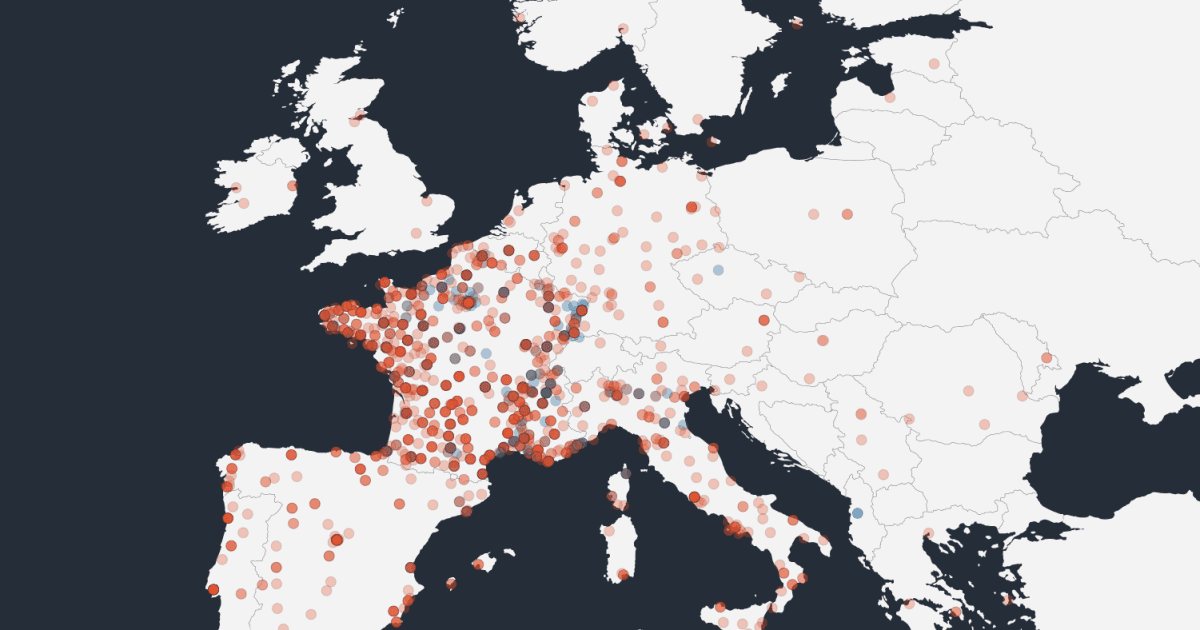
Analytical data from ACLED recorded more than 1,200 protests or disturbances involving 100 or more people in France between September 15 and October 30, while the total number of demonstrations across Europe exceeded 1,700 events during the same period.
The movement began in mid-September within high schools due to student complaints about overcrowded classrooms, teacher shortages, and dilapidated building conditions, then expanded to include demands against rising living costs and the joining of trade unions and the "Yellow Vests" movement.
Clionda Riley, CEO of ACLED, stated that the daily rate of protests rose from an average of 20.5 over the past five years to nearly 66 per day during this current cycle, reflecting a doubling of activity compared to usual rates.
Riley added that the percentage of events classified by analysts as disturbances reached 24.2 percent, a figure far exceeding the previous average and approaching the level of disturbances that followed Nahel Merzouk's death in 2023.
Human rights experts from the Human Rights Council stated that the scale of arrests and detention involving thousands of people, most of them minors, appears disproportionate and discourages the exercise of basic freedoms of expression and peaceful assembly.
The police response also drew widespread criticism, particularly after the use of tear gas, rubber bullets, and batons against protesters in Paris and Lyon, where about 70,000 security personnel were deployed to disperse gatherings.
Violence incidents occurred in northern France in Lille, where a teenager lost an arm due to a bomb explosion during clashes between school protesters and police, while looting and violence spread in some demonstrations that turned chaotic.
The number of participants in national gatherings alone on October 17 exceeded half a million according to government estimates, making it one of the largest protest movements in Europe over the past decade.
Other European countries such as Spain, Italy, Portugal, and Germany witnessed similar demonstrations revolving around the same economic and social axes, with thousands of Spaniards taking to the streets after parliament rejected emergency housing laws, while Italy also saw heightened protests around unaffordable housing.
Professor Alberto Alemanno from HEC Paris noted that France represents the gravitational center of this movement, with indicators suggesting it is spreading beyond French borders to include other countries suffering from similar economic crises.
Analysis & context
Analysis & Context
From an analytical perspective, France serves as the epicenter of this European wave of protests that has extended to 30 other countries including Spain, Italy, Germany, and Portugal. Professor Alberto Alemanno from HEC Paris observes signs of social discontent transferring from France to neighboring countries, driven by shared issues such as lack of public services and rising prices.
In a broader context, data indicates that protests in Europe during the same period exceeded 1,700 events, reflecting a structural crisis related to living costs incompatible with current wages. Spain witnessed massive demonstrations after parliament rejected emergency housing laws, while Italy also faced intensity around unaffordable housing issues.
The role of organizations like ACLED in monitoring these movements accurately is highlighted, revealing that the current protest cycle has lasted 45 days and remains ongoing, with a noticeable rise in confrontation levels between protesters and police. International expert reports also highlight legal and human risks resulting from harsh security handling of demonstrators.
Finally, the interweaving of economic and social issues such as housing, education, and wages makes these protests a complex phenomenon transcending national borders and requiring comprehensive political solutions.