Sourced fact
The News
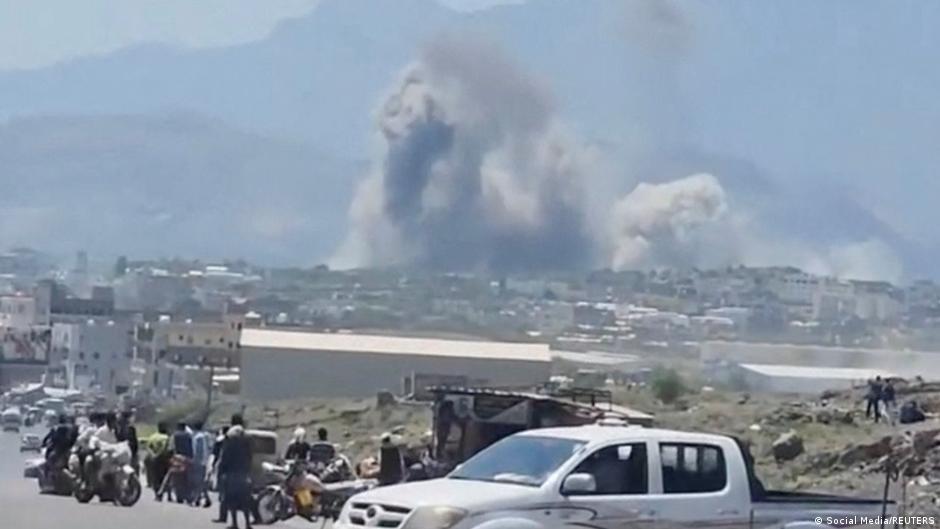
The Yemeni Houthi group accused the Saudi Air Force on Sunday of bombing a shopping area around the central market in the city of Taiz, an attack that reportedly killed at least seven people and injured dozens more, according to the group. Footage broadcast by Al-Masirah TV channel, affiliated with the group, shows thick smoke and a destroyed warehouse filled with packaged food boxes. The Houthi Ministry of Health stated that children were among the wounded in this assault.
Yahya Suri, the Houthis' military spokesperson, said Saudi forces launched two airstrikes directly targeting the market, noting that blood had been shed "unfairly and through an aggressive manner" in a statement posted online. In response, forces affiliated with the internationally recognized Yemeni government confirmed they carried out attacks on Houthi warehouses and transport vehicles in the same area in retaliation for these claims.
Taiz city, located in southwestern Yemen, has been under government control for a long period, although Iran-linked armed groups have besieged it and consider it one of the main fronts in the Yemeni civil war that erupted in 2014. Regional tensions escalated after a fragile ceasefire between the two sides collapsed months ago, amid rising tensions stemming from the ongoing war with Iran, which encouraged the Houthis to launch a rapid offensive resulting in their full control of the Red Sea coast.
The Yemeni group declared its determination to respond to these attacks, while the Yemeni government called for a general mobilization to encourage citizens to join the armed forces and security forces to face increasing threats. Yemen faces one of the world's poorest nations and continues to suffer from a widespread humanitarian crisis, with at least 125,000 people displaced due to intensified fighting in several parts of the country during last September.
Analysis & context
Analysis & Context
From an analytical perspective, this new air strike represents a dangerous escalation in the Yemen war that began in 2014 when the Houthis seized control of the capital Sanaa and then expanded their dominance to include vast parts of the north. Saudi Arabia subsequently intervened to lead an international coalition against the Houthis, but government forces have so far failed to effectively repel the latest Houthi offensive.
In the broader context, Yemen is suffering from one of the world's worst humanitarian crises, with a large portion of its population living in extreme poverty amid the collapse of essential services. The escalation of fighting last September displaced at least 125,000 people, further exacerbating civilian suffering in areas like Taiz, which continues to see ongoing clashes.
This conflict poses a major challenge to regional stability in the Middle East, where Iranian, Saudi, and American interests intersect over the Yemen file. Additionally, Iran's closure of the Strait of Hormuz coinciding with the Houthis' blockade on Saudi energy exports adds a new dimension to security tensions in the region.
Yemeni President called on citizens to join the army and security forces to face this military escalation, while warring factions continue to launch reciprocal attacks that intensify humanitarian suffering in the country.