Sourced fact
Today's top technology stories
Today's technology news focuses on intertwined developments in the semiconductor and space sectors. Nvidia faced political backlash after Jensen Huang was reinstated as CEO amidst national security debates, while Huawei's U.S. trial concluded with a conviction on commercial espionage charges but acquittal on racketeering. In another global development, the European Space Agency sent the Hera spacecraft to NASA's DART asteroid impact site to assess damage from the 2022 space experiment.
Nvidia stock drops amid Trump role questions over Jensen Huang return
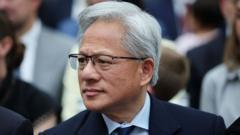
Nvidia's shares fell on Tuesday after U.S. politicians questioned President Donald Trump's role in reinstating Jensen Huang as CEO, according to BBC News. Huang was restored to his position at the semiconductor manufacturer on Monday, less than two weeks after being forced to resign following controversies over his extramarital relationship with a woman suspected of being a Chinese spy. The company's board stated that Huang's reinstatement served the "best interests of shareholders, employees, partners, and customers," noting he received input from high-level U.S. government officials and expressed confidence in the absence of any national security threat.
Huawei Guilty of Trade Secret Theft but Not RICO Conspiracy in Historic US Trial
Huawei was convicted in a historic U.S. trial on charges of conspiring to steal trade secrets and bank fraud, while being acquitted of the more serious racketeering charge, according to BBC News. A jury at Brooklyn Court found the company guilty on 10 out of 12 counts against it, which included violations of U.S. sanctions. In a statement released after the verdict, Huawei confirmed that its acquittal on the racketeering charge proves there was no factual basis for those allegations and reinforces its steadfast position over the past eight years.
ESA Hera Mission Assesses NASA DART Impact on Dimorphos Asteroid
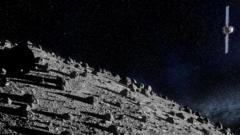
An European Space Agency (ESA) spacecraft arrived at an asteroid to investigate damage from an unprecedented space collision, according to BBC News. The mission was experimental, aimed at testing planetary defense against rocks heading toward Earth; the asteroid posed no real threat but served as a target for the experiment. After four years, the European Hera mission is now scanning the entire scene to evaluate final results of the impact, with first images of the site scheduled for release later this Wednesday.
Analysis & context
Reading the day's news
Analytically, these first two stories reflect major powers' efforts to maintain technological dominance by tightening scrutiny on Chinese companies—either through direct intervention in corporate decisions as seen with Nvidia or via trials targeting commercial espionage as in Huawei's case. In a broader context, these moves mirror ongoing geopolitical tensions between the U.S. and China spanning from the chip sector to outer space, where each side attempts to impose its vision of national security and international trade. Regarding the third space mission, it highlights a shift in space exploration strategies from merely reaching celestial bodies to studying actual interactions between spacecraft and rocky objects in space. This wider context suggests that international scientific cooperation remains possible even amid political tensions, as ESA and NASA collaborate to gather critical scientific data on collision impacts that could have future implications for protecting Earth from asteroids.