Sourced fact
The News
The extremist group known as "State Man" has denied any involvement in the false bomb alerts that caused flight cancellations across Europe, even as new threat reports continued to emerge.
In response to inquiries from Russia's RIA Novosti agency, the group stated that its name had not been in use for many years and mocked claims linking it to sending emails containing these warnings.
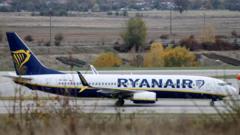
In a related development, new alerts surfaced affecting a Ryanair flight from Rome to Lisbon, while a Wizz Air plane was diverted from Prague to Rome and then to Venice after receiving a threat. Several prominent Irish media outlets also faced bomb threats, prompting the Irish government to issue a statement suggesting this could be a coordinated campaign aimed at creating chaos.
Sources at Rome's airport management company stated that such alerts were highly unusual and had not been seen on this scale in recent years, confirming that no explosives were found on the diverted or grounded aircraft.
Italian newspaper La Stampa reported that the attack and its subsequent denial are part of a known Russian playbook designed to disrupt Western systems without direct responsibility. The group had been banned in Russia since 2021, and its founder now lives abroad.
On his part, Italian Defense Minister Guido Crosetto warned against a strategy aimed at increasing chaos across Europe through hybrid threats including cyberattacks and other security threats.
The minister explained that certain actors seek to exploit incidents such as cooling system attacks on supermarket refrigerators to heighten tensions, affirming that Italy's focus remains on ensuring national security and countering these intentions.
Analysis & context
Analysis & Context
Analytically, the group's denial of involvement despite ongoing attacks illustrates a common tactic used by extremist groups to mislead and divert attention from their true identity. Furthermore, Italian Defense Minister Guido Crosetto's remarks about "hybrid threats" intended to destabilize Europe by fomenting tensions reflect growing concern over integrated cyber and physical attacks targeting critical infrastructure.
In a broader context, reports in the Italian newspaper La Stampa suggest that the attack and its denial are part of a known Russian plan aimed at confusing Western systems without assuming direct responsibility. This approach aligns with what the organization Bellingcat described in 2022 as a "terrible voice" supporting Russia's invasion of Ukraine and carrying clear far-right extremist ideologies.
Additionally, the increasing frequency of attacks on infrastructure such as refrigerators whose temperatures were recently raised, along with threats directed at airports, points to a systematic strategy to create chaos across Europe. These attacks are not random but appear to be part of organized campaigns designed to drain security resources and erode public trust in European and international institutions.
Finally, European authorities continue to search for the identity behind this series of fake messages, raising questions about whether there is coordination between groups or mere imitation by ideologically similar actors. This situation underscores the need for more effective international security cooperation to address hybrid threats targeting aviation security and social stability across the European continent.