Sourced fact
The News
The European Union's public prosecutors have launched an investigation into the alleged misuse of funds allocated for upgrading the Madrid-Seville railway line, which was the site of a train disaster that killed 69 people last week. Officials from the European Prosecutor's Office stated that the investigation is taking place at the headquarters of Spain's Railway Infrastructure Agency (Adif) and the Railway Safety Authority (AESF) following an incident that occurred on October 28 on the high-speed line between Madrid and Seville.
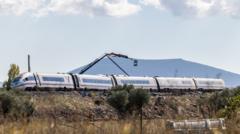
This marks the second inquiry into fraud opened by the European Union regarding Spanish railways this year, following another disaster in January that claimed 46 lives on the same line near the town of Adomuz. Last week, a train operated by the state-owned Renfe company collided with a stationary train belonging to private operator Euskotren outside Urdia village, some 130 kilometers south of Madrid, due to a malfunction in the LZB system that monitors train locations.
Officials clarified that the Renfe train received authorization to depart at normal speed despite the front Euskotren train being unable to restart after its stoppage. The accidents on the same line, occurring with a nine-month gap, have claimed 115 lives and injured dozens of others, intensifying criticism directed at Prime Minister Pedro Sánchez's Socialist government ahead of the general election on November 29.
Transport Minister Óscar Puente, a close ally of Sánchez, resigned after witnessing two fatal accidents under his supervision this year, while opposition parties, including the People's Party and the far-right Vox party, have called for Sánchez's resignation as well. Spanish railways have seen a notable decline, with widespread cancellations and many passengers now avoiding train travel out of fear of further incidents.
A funeral for the victims of the Urdia disaster will be held on Tuesday at Toledo Cathedral, while Carlos Queipo, who succeeded Puente, pledged to take all necessary measures to restore trust in Spain's high-speed railways among Spaniards. Queipo met with survivors of the January Adomuz disaster and was handed a list containing 11 demands for improving safety on Spanish railways.
Analysis & context
Analysis & Context
From an analytical perspective, this investigation represents part of the European Union's efforts to ensure transparency and accountability in managing public funds allocated for critical infrastructure projects, particularly those affecting citizens' public safety. This case illustrates how technical safety issues can intersect with complex legal and political dimensions within member states.
In a broader context, the disaster highlights ongoing challenges facing the European railway sector, where there is an increasing need to upgrade outdated systems and adopt advanced digital technologies to ensure the efficiency and safety of high-speed transport networks. The results of this investigation could contribute to establishing higher standards for financial and technical oversight on major infrastructure projects in the future.
The political resignation of the Transport Minister and the growing calls for the Prime Minister's dismissal also reflect the repercussions of major disasters on political stability and governance in democratic countries, where governments are compelled to take responsibility for their mistakes before public opinion and parliament. These events may lead to a reevaluation of local and international government priorities regarding public safety investments.
Finally, the increasing wariness of people about taking trains and rising cancellation rates at stations indicate a deep psychological impact of disasters on community behavior and travel culture, calling for intensive efforts to restore trust through improved security systems and effective communication with the public.