Sourced fact
The News
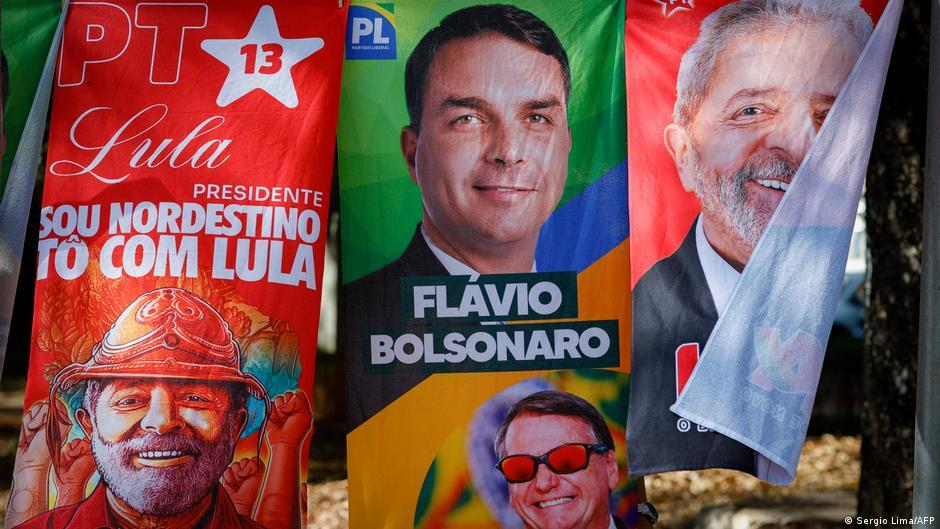
In a speech delivered on Tuesday at the opening of the United Nations General Assembly in New York, Brazilian President Luiz Inácio Lula da Silva declared that his country does not belong to any other nation's sphere of influence, indirectly addressing his American counterpart, Donald Trump, who did not attend the event. These remarks come as Brazil prepares for a presidential election scheduled for October 4, where Lula will face Flavio Bolsonaro, the older son of former president Jair Bolsonaro, who is considered Lula's strongest opponent according to opinion polls showing a significant closeness between the candidates.
This competition highlights Brazil's importance as an agricultural powerhouse rich in natural resources such as rare earth elements and crude oil, making the election results a matter of global attention. Experts indicate that a victory for Flavio Bolsonaro could jeopardize Brazil's role within the BRICS alliance, given the former president's expressed support for reviewing the country's membership, viewing the bloc as a threat to the United States. Additionally, the win of the far-right candidate could lead to cooling political relations with China, despite the vital trade and economic ties upon which Brazilian agriculture heavily depends.
Analysts from the Getulio Vargas Institute in Brasilia emphasize that Lula has successfully established natural relations with Trump despite initial friction, whereas Flavio may be more inclined to align with Washington due to his father's background of making significant concessions, such as abandoning developing nation status in exchange for unfulfilled promises to join the OECD. Roberto Requejo, a former diplomat, adds that Lula enjoys high credibility in foreign policy thanks to his commitment to environmental and climate issues, reflected in his selection of Silva as Environment Minister.
In contrast, should Bolsonaro win, experts warn of repeating his father's mistakes that led to Brazil's international isolation and the suspension of trade agreement negotiations with the European Union. Requejo notes that economic ties with China may cool but without a fundamental change in trade, while Leonardo Pas argues that Flavio is unlikely to adopt severe hostile stances toward Beijing due to heavy economic dependence. Pas also confirms that Brazil will remain a key player in the Global South under Lula's leadership by defending issues of global governance and climate policies, but could lose this role if power shifts to the far-right camp.
Analysis & context
Analysis & Context
From an analytical perspective, foreign policy has not played a major role in the election campaign so far, but the results will determine whether Brazil will move closer to or further away from the United States. Washington seeks to enhance its economic and military dominance in South America through the Americas Shield initiative aimed at combating criminal gangs, while Lula pursues multilateral diplomacy and trade expansion with all nations, including China, which remains his most important long-term trading partner.
In a broader context, Leonardo Pas, an expert from the Brazilian Getulio Vargas Institute, argues that Flavio Bolsonaro's victory does not necessarily guarantee automatic improvement in relations with the United States. He notes that Lula successfully built natural ties with Trump despite early friction, whereas the younger son is likely to be more responsive to Washington's pressures compared to his father, who made major concessions such as relinquishing "developing nation" status at the World Trade Organization in exchange for a non-fulfilled promise to join the OECD.
Furthermore, Bolsonaro's potential win could endanger Brazil's future membership in BRICS, where the former president declared his intent to review participation, citing irritation of the United States and opposition to China's efforts to reduce the global dominance of the US dollar. While political relations with China may cool, economic and trade links are expected to persist due to the heavy reliance of Brazilian agriculture on the Chinese market.
Finally, analysts believe that Brazil will remain a secondary player on the global stage due to its relatively weak economic and military power compared to major powers, yet it retains a prominent role in the Global South under Lula's leadership, which prioritizes environmental, climate, and development issues.