Sourced fact
The News
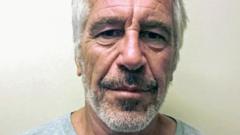
Criminal expert Michael Freeman confirmed to BBC Newsnight that the death of Jeffrey Epstein in prison was a homicide and not suicide. Freeman based this conclusion on a review of the New York Medical Examiner's Office file, which he obtained from his brother Mark Epstein without any financial compensation.
The expert stated that the injuries found on Epstein's body are consistent with strangulation from behind using a rope, pointing to deep bleeding in the left shoulder and facial injuries that appear consistent with blunt force trauma. Freeman also noted fingernail marks above the site of the rope around the neck, suggesting the victim attempted to remove the rope while being strangled.
In contrast, the medical examiner who performed the autopsy in 2019 concluded that the injuries were consistent with hanging suicide and found no evidence of defensive injuries. Dr. Barbara Sampson, who served as the chief medical examiner at the time of death, stated she stands behind the determination of cause and manner of death as suicide.
Epstein died on August 10, 2019, while awaiting trial on charges of sex trafficking at the Metropolitan Correctional Center in New York. His death occurred one month after he was placed under watch for suicide prevention; the guard who found the body immediately contacted a colleague and lowered the body to the floor in an attempt to revive him.
When asked by BBC Newsnight about the identity of a potential killer if his interpretation were correct, Freeman said he holds no opinion on that matter and is not part of any investigation. He admitted that his analysis was independent and non-partisan for scientific review but urged everyone to examine the evidence themselves rather than relying solely on his opinion.
Analysis & context
Analysis & Context
From an analytical perspective, this issue raises a significant debate regarding the credibility of official reports in suspicious death cases within American prisons, especially when independent medical evidence contradicts the initial conclusions of judicial authorities. The presence of an independent expert like Freeman, who did not see the body himself but relied on documents and images, adds another layer of complexity to investigations that are often governed by speed and routine procedures.
In a broader context, the Epstein case remains one of the most controversial issues in the Western world due to the nature of the crimes he committed and the international network of relationships he was associated with. His sudden death led to a series of accusations and scandals that continue to be discussed today, making any new analysis of medical evidence a sensitive and controversial matter in global public opinion.
Independent reports indicate gaps in the official investigation that did not include photographs of the body before it was removed from the bed, which Freeman considered a weakness in the suicide report. These gaps open the door to alternative theories about the circumstances of death and underscore the importance of transparency in handling major criminal cases that touch upon prison security and human rights protection.
Finally, the role of academics and independent experts remains crucial in reviewing official conclusions when there are indications of a mismatch between the evidence and the official narrative. Freeman's call for people to review the evidence without relying solely on his opinion reflects an academic integrity seeking the truth regardless of political or social pressures surrounding the case.