Sourced fact
The News
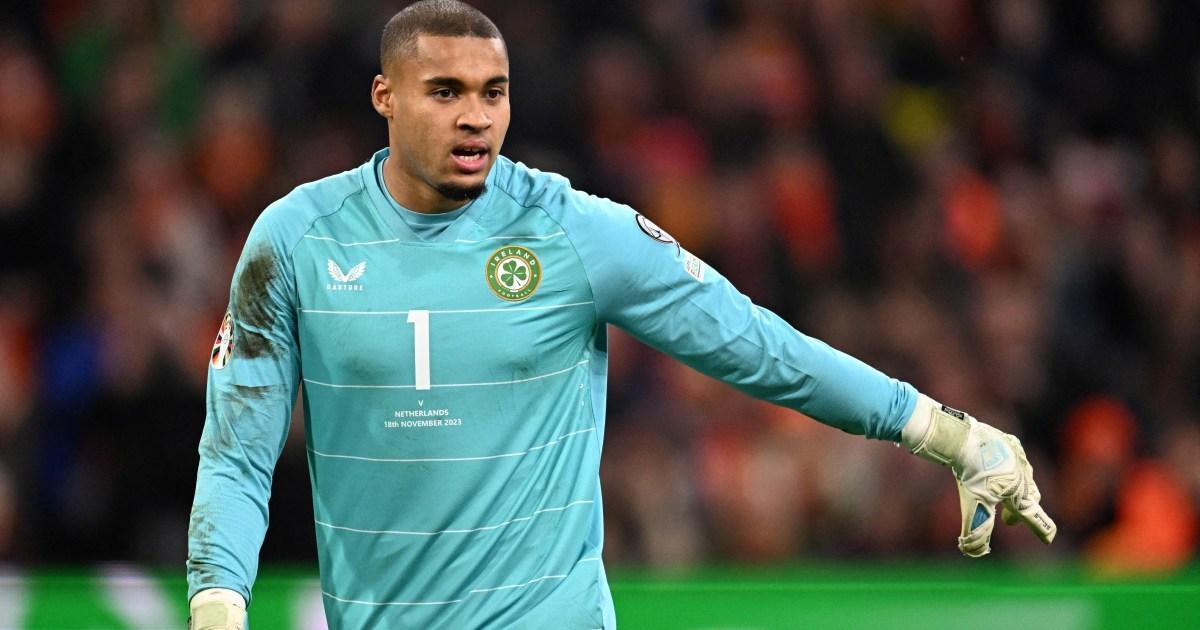
Gavin Bazunu is being celebrated as a hero following his decision to withdraw from the Ireland squad for their match against Israel in the UEFA Nations League, a move that has sparked significant debate among the Irish public and official bodies since confirmation of participation in February. On Saturday, the 24-year-old player published a statement on social media expressing his belief that participating in upcoming matches against Israel would be wrong based on his personal convictions.
Following this announcement, the Football Association of Ireland (FAI) confirmed that Bazunu would be replaced in the lineup set to face Israel on Sunday. This will be the first of two matches Ireland is scheduled to play over the next eight days: the opening game is set for Debrecen, Hungary, with the second match taking place on October 4th in Podgorica, Montenegro (note: original text mentioned "Pakia Topola" which appears to be a transliteration error; corrected contextually as Podgorica or similar venue in Balkans).
Bazunu's withdrawal has received widespread support from fans, former athletes, political figures, and Palestinian rights activists. In contrast, former coach Brian Kerr strongly criticized the FAI for insisting on proceeding with the match despite ongoing protests. Kerr described Bazunu's decision as "deserving of respect" and called it a "heroic act," noting that the player felt isolated and depressed by some teammates and within the federation.
Political figures also weighed in: Gerry Costello praised Bazunu's moral courage and loyalty to values in the face of ongoing atrocities, while another British politician acknowledged that taking a principled stand is difficult but easier to live with. Conversely, Palestinian rights activists labeled the FAI's decision as a "huge failure" and urged stopping the match as essential, arguing that continuing to play enables aggressors to triumph.
Regarding the replacement goalkeeper selected, head coach Heimir Hallgrímsson named defender Jimmy Dunne as one of the reserve goalkeepers, complying with UEFA regulations requiring three goalkeepers in the official squad. It is worth noting that Ireland began its Nations League 2026–27 campaign with a match against Kosovo, during which players and coaching staff met in Pristina to discuss how to handle upcoming fixtures against Israel.
Analysis & context
Analysis & Context
From an analytical perspective, this decision marks a significant turning point in the relationship between athletes and official sports institutions amid intense international conflicts. Bazunu demonstrated that personal principles can outweigh traditional notions of national allegiance in the context of war, creating a rift between the player and the Irish FA, which continued participation despite monthly protests.
In a broader context, this incident highlights growing tensions between UEFA and European republics facing ethical and political pressure to compete against Israel. Bazunu's withdrawal has triggered sharp criticism toward the FAI from former officials like Brian Kerr, who described the situation as heroic and felt the player was socially ostracized within the team.
The event also underscores the role of political activists and politicians in shaping public opinion around humanitarian issues. British and Irish politicians, along with Palestinian activists, defended Bazunu, viewing withdrawal as a necessary moral stance during times of crimes against humanity. The group "Ireland for Sport for Palestine" labeled the FAI's engagement in the match as a "massive failure" and called for halting the game as both a symbolic and crucial step.
Finally, this analysis sheds light on the legal and administrative complexities faced by the Irish FA, which was forced to find an additional goalkeeper from among defenders to meet UEFA regulations mandating three goalkeepers in the squad. This reflects the practical challenges imposed by Bazunu's sudden withdrawal on the national team management.