Sourced fact
The News
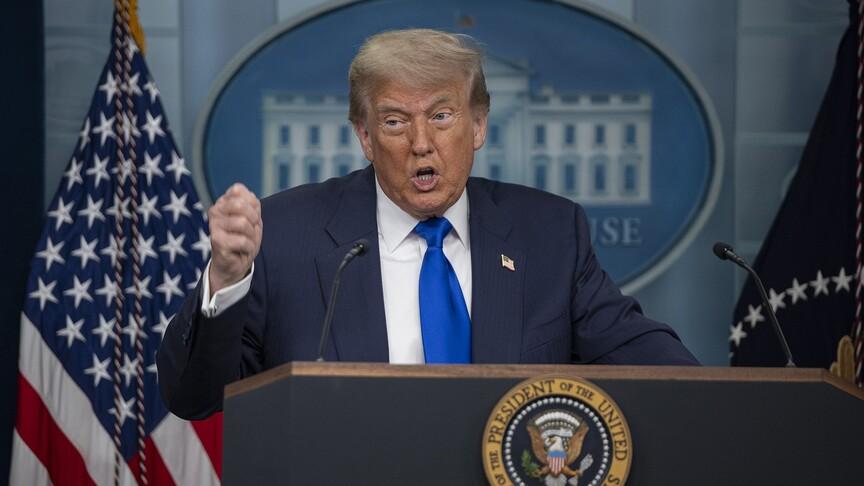
US President Donald Trump announced on Saturday that he rejected the latest proposal put forward by Iran during a round of indirect talks held this week in New York, according to reports from Axios. Speaking to reporters outside the White House, Trump stated, "They gave us a proposal and we rejected it," reaffirming the US administration's stance on the new Iranian offer.
Despite this explicit rejection, a US official confirmed that discussions between Washington and Tehran remain positive and constructive, proceeding through regional intermediaries on sensitive issues including nuclear matters. The latest round of indirect talks featured US Special Envoy Steve Witkoff and Jared Kushner, son-in-law to the President, alongside Iranian Foreign Minister Abbas Araghchi at the sidelines of the UN General Assembly.
During these sessions, Araghchi presented Iran's conditions for reopening the Strait of Hormuz and resuming nuclear negotiations, wherein Tehran proposed re-opening the strategic passage and returning to nuclear talks within a week in exchange for lifting the US naval blockade, cancelling sanctions on Iranian oil exports, and halting hostilities in the region.
However, US negotiators informed their Iranian counterparts that Iran does not effectively control the strait and therefore cannot make demands related to it, according to an insider source who spoke to Axios. These talks come at a time when Turkey, Qatar, and other regional intermediaries are seeking to revive diplomacy between the two nations despite ongoing fundamental disagreements over core issues.
Analysis & context
Analysis & Context
From an analytical perspective, Trump's rejection of the Iranian proposal highlights a complex situation reflecting the delicate balance between the desire to resume nuclear dialogue and strict US strategic principles regarding territorial sovereignty and control over maritime passages. The continued characterization of talks as "positive and constructive" despite the rejection suggests that the diplomatic process remains alive and seeks common ground that could have long-term implications.
In the broader context, the Strait of Hormuz issue represents a historical point of contention between Tehran and Washington. Iran views the passage as part of its sovereignty, while the US considers it a vital international channel that should not be subject to unilateral threats or demands. This contradiction in understanding control over the strait constitutes a major obstacle to any comprehensive agreement that could restore relations to their natural course.
Additionally, the role of regional intermediaries such as Qatar and Turkey gains increasing importance following the failure of previous direct bilateral talks, where these countries act as communication bridges to convey messages and reduce tension before parties reach an acceptable formula for all. The success or failure of these efforts will largely depend on the mediators' ability to reconcile the conflicting demands of both sides without compromising major security interests.
Finally, the nuclear file remains the primary driver of these indirect negotiations, where reactivating it offers an opportunity to stabilize the region and reduce the risk of military escalation that could threaten regional and international stability on a wide scale.