Sourced fact
The News
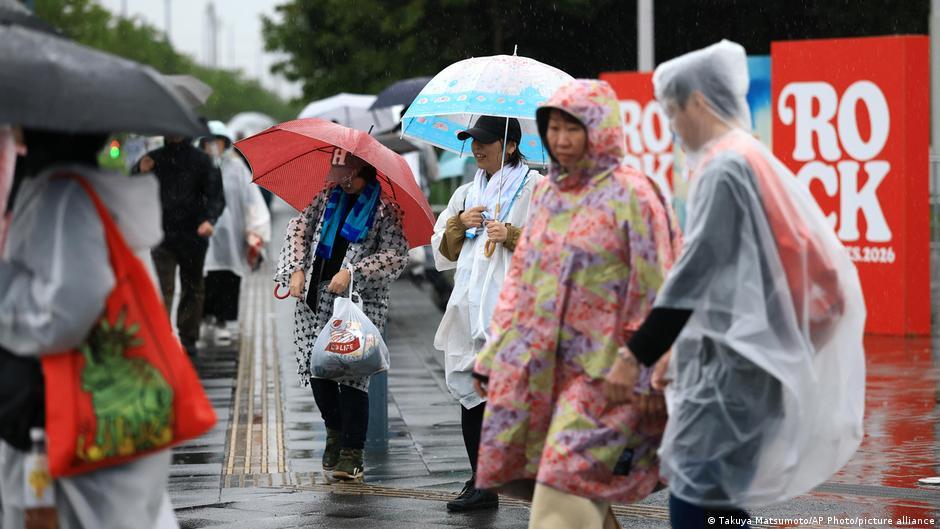
The approach of the powerful typhoon "Dujuan" to Japan's eastern coast on Monday triggered a widespread state of emergency, resulting in the cancellation of hundreds of flights and prompting emergency authorities to issue warnings regarding flooding and landslides. According to the Japan Meteorological Agency (JMA), a Level 5 warning—the highest level on their scale—was issued for Izu Islands, stating that the situation is "life-threatening" and urging residents to ensure their safety immediately.
Typhoon Dujuan is expected to pass near the Tokyo metropolitan area later the same day, while more than one million people have been reported under evacuation orders. Wind speeds in the typhoon reached 144 kilometers per hour as it hovered approximately 110 kilometers from Hachijo Island, one of the remote islands of the Tokyo metropolis. Parts of the Izu Islands and neighboring Chiba Prefecture had already experienced heavy rainfall over the weekend.
The Japan Meteorological Agency (JMA) warned that weather conditions could deteriorate rapidly, with total rainfall potentially exceeding September's average by Tuesday, leading to unprecedented record-breaking rains. Authorities also warned of the possibility of linear rain bands forming over central Japan and the Kanto region, which includes Tokyo and surrounding prefectures, thereby increasing the risk of rain-related disasters such as flash floods and landslides.
Various regions in Japan have been severely affected by the storm's advance, with power outages cutting off more than 4,000 homes in Chiba Prefecture. In central Aichi Prefecture, which is hosting the Asian Games, equestrian competitions have been postponed until Tuesday. Additionally, Tokyo Game Show was closed before its official conclusion on Monday, and the typhoon may also affect travel plans during Japan's recently started "Silver Week" holiday, which typically sees a surge in domestic travel.
Analysis & context
Analysis & Context
Analytically, Level 5 weather warnings in Japan represent a critical indicator reflecting the severity of the threat posed by extreme weather phenomena to infrastructure and populations. Such high-level alerts indicate that authorities anticipate significant damage requiring large-scale emergency interventions, including mandatory evacuations and the disruption of vital services such as air transport and railways.
In a broader context, Japan demonstrates high sensitivity to accelerating climate change, which is leading to increased frequency and intensity of typhoons and heavy rainfall. The area surrounding Tokyo and the Kanto region is among the most densely populated in the world, making any atmospheric disturbance have enormous economic and social implications for millions of residents and major international events like the Asian Games currently being held in the country.
Typhoon Dujuan's ability to cause power outages affecting thousands of homes and disrupting sports and cultural events highlights Japan society's growing reliance on digital and electrical infrastructure, which is vulnerable to complete paralysis during major natural disasters. Furthermore, the timing of the typhoon's arrival during "Silver Week" underscores the dangerous overlap between tourism economic cycles and sudden environmental threats that disrupt family and tourism travel plans.
Linear rain bands are a severe weather phenomenon characterized by extremely heavy rainfall in a narrow area over a specific period, serving as a primary factor responsible for flash floods and landslides in mountainous regions or areas with unstable soil in Japan. Understanding these atmospheric mechanisms helps explain why emergency situations deteriorate rapidly even when the typhoon is relatively distant from certain points, necessitating a swift response from civil defense agencies and local authorities.