Sourced fact
The News
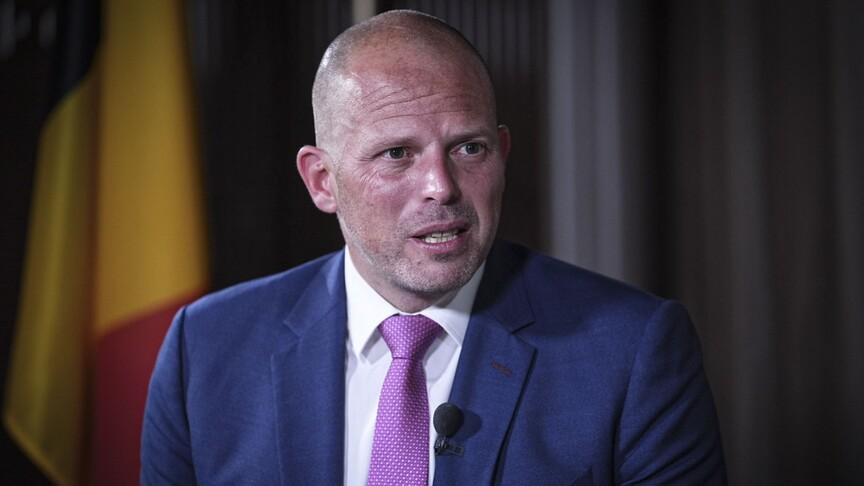
The Belgian Ministry of Defense has announced an annual investment of approximately $11.5 million in research and development related to hypersonic technologies and space through an expanded partnership with the Von Karman Institute for Fluid Dynamics. Defense Minister Theo Francken explained that this investment aims to enhance Belgium's European military technological capabilities, particularly in light of the rapid developments witnessed in modern conflicts such as the war in Ukraine.
Speaking on X (formerly Twitter), Francken stated that the institute, located in Sint Genesius-Rode, Belgium, conducts vital research for innovation in missile and airspace technologies, describing its testing facilities as unparalleled in Europe. He added that the ministry will expand cooperation to include areas such as aerothermodynamics, cryogenic cooling techniques, and liquid metal flows for designing future aircraft and missiles.
The Belgian minister emphasized that progress in these fields is essential to maintaining military superiority and ensuring peace, noting that NATO has supported the institute since its founding due to the military value of its research. He further added that the new partnership makes the Belgian Ministry of Defense a structural partner of the institute to fund more ambitious research while strengthening security around strategic knowledge of interest to countries such as China and Russia.
Analysis & context
Analysis & Context
From an analytical perspective, the Belgian Ministry of Defense's transformation into a structural partner of the institute represents a strategic move aimed at accelerating military innovation across Europe. The focus on technologies such as liquid metal flows and aerothermodynamics reflects the need for European research centers to keep pace with rapid developments in modern conflicts, especially amid threats from hypersonic technology.
In a broader context, Belgium's interest in this collaboration highlights part of European efforts to strengthen collective security amidst growing strategic attention from countries like China and Russia toward advanced military research outcomes. Strengthening the security protection of strategic knowledge within the institute reflects European concerns about the leakage of sensitive technologies that could alter global power balances.
Hypersonic research is a highly competitive global field where major powers strive to develop defensive and offensive systems capable of penetrating traditional defense networks, making investment in such research vital for European nations to ensure their security and technological independence.