Sourced fact
The News
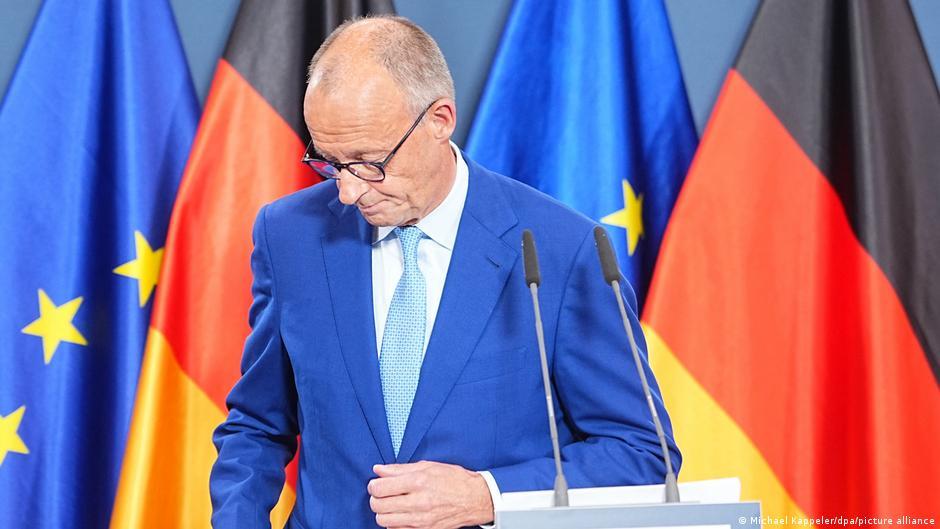
The German government led by Chancellor Friedrich Merz of the Christian Democratic Union (CDU) faces a decisive electoral defeat following the victory of opposition parties in the states of Berlin and Mecklenburg-Vorpommern, where for the first time in its history, the ruling party failed to cross the five percent threshold to represent itself in the state parliament in the eastern state.
A spokesperson for the Christian Democratic Union clarified that the results in Mecklenburg-Vorpommern were catastrophic, while describing the loss in Berlin as acceptable, just minutes after preliminary election forecasts were released showing a sharp decline in the popularity of the ruling party.
Berlin witnessed a major political shift where support for the Christian Democratic Union dropped to around 20%, while the Left Party surged to become the top candidate with nearly 25% of the votes, placing it in a strong position to form an alliance with the Social Democratic Party and the Greens.
In Mecklenburg-Vorpommern, the Alternative for Germany (AfD), classified by the Federal Office for the Protection of the Constitution as partially far-right, secured 38% of the votes, surpassing the Christian Democratic Union, while the Greens came in third.
Manuela Schwesig, the Minister-President of Mecklenburg-Vorpommern, stated she is committed to forming a stable democratic government, while AfD leader Alice Weidel declared that the containment strategy pursued by the Christian Democratic Union had failed and expressed her desire to hold coalition talks with the party.
Elif Elif Erkalp, the new candidate for the Left Party, ruled out taking office as Mayor of Berlin if a left-wing government were formed, reaffirming her vision of creating an affordable Berlin for everyone regardless of their background, religion, or language.
The federal government faces increasing pressure, particularly in foreign policy, where the Alternative for Germany rejects military support for Ukraine in its war against Russia, while Chancellor Merz continues to insist on economic and social reforms aimed at reducing healthcare costs and pension insurance, despite public rejection of these measures.
Chancellor Merz stated he wants to push the country forward, asserting that the success of the reforms will enhance the image of German society and Germany globally, considering that the situation now requires courage, resolve, and patience, and he is prepared to bear this responsibility as head of the Christian Democratic Union and Chancellor of the country.
Analysis & context
Analysis & Context
From an analytical perspective, these election results reflect a widespread wave of public discontent with Chancellor Merz and his ruling coalition with the Social Democratic Party (SPD). National opinion polls indicate that the ruling coalition has lost its majority, while the far-right clearly dominates in voting, signaling a fundamental shift in the German political landscape in favor of extreme parties at the expense of ruling parties.
In a broader context, the federal government faces increasing pressure, particularly in foreign policy, where the Alternative for Germany strongly opposes providing military support to Ukraine in its war against Russia. This position places the German government in a critical stance between adhering to international agreements and maintaining internal stability amid the rise of parties that reject foreign intervention.
Left-wing parties plan to form new alliances based on support from the Social Democratic Party and the Greens, which could lead to the election of the first left-front mayor of Berlin, Elif Erkalp. These developments reflect a profound political shift as extreme left and right forces seek to divide the political landscape while center parties face a collapse in their prospects.
Amid these challenges, Chancellor Merz emphasized the necessity of continuing reforms despite difficulties, noting that the success of these reforms will enhance Germany's image in the world and restore trust in society. However, measures such as raising healthcare costs and reducing family insurance coverage are unlikely to garner any new popular support for an already unpopular government.