Sourced fact
The News
The Alternative for Germany parties achieved significant electoral gains in the northeastern German states and Berlin, yet they will remain opposition parties in both regions despite topping the vote lists in Mecklenburg-Western Pomerania. According to exit poll results published by Ifos-Dimap late Sunday evening, the Alternative secured 37.9% of the votes in Mecklenburg-Western Pomerania, surpassing the Social Democratic Party which garnered 35.7%. Preliminary results indicate that final election outcomes may shift as remaining ballots continue to be counted.
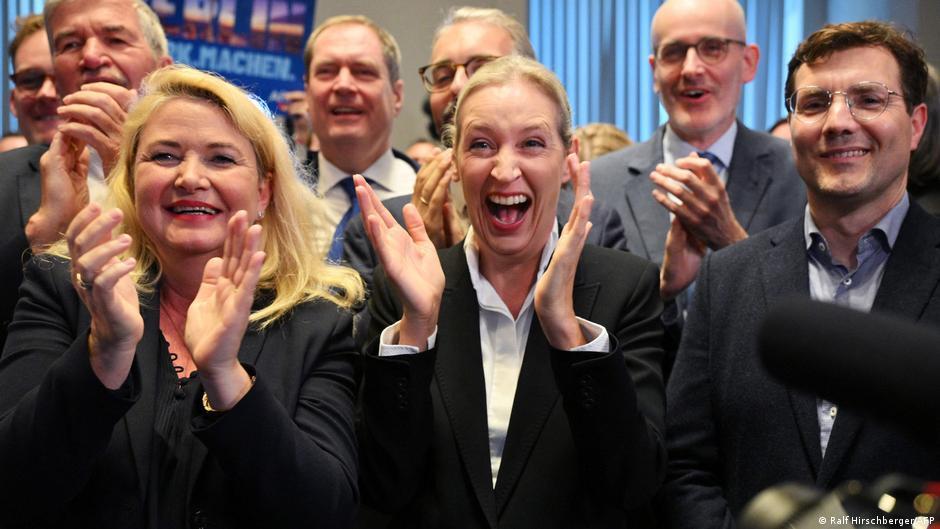
Party leadership of the Alternative expresses great optimism about its political future. Tino Schuchmann, one of the party leaders, stated they now possess a governing mandate in Mecklenburg-Western Pomerania and declared their readiness to engage in alliance talks with all other parties. He also predicted that Chancellor Friedrich Merz would resign immediately, viewing this as a relief for the country. Meanwhile, Alice Weidel, Schuchmann's colleague on the leadership team, announced that her party considers itself the new successor to the Christian Democratic Union amidst its significant losses.
However, the party faces major challenges in forming majority governments, having failed to secure an absolute majority in Saxony-Anhalt following a previous victory on September 6th. Schuchmann explained that the party seeks to form any type of government, including minority governments, while Ulrich Seemann, the candidate leader in Saxony-Anhalt, insisted on leading a single-party government and ruled out forming a minority government supported by members from other parties.
In Berlin, the Alternative secured 16.2% of the votes, a figure lower than recent predictions which indicated 18%. The movement faces increasing criticism due to election campaign scandals involving the withdrawal of a candidate in Mecklenburg-Western Pomerania after it was discovered he was a former bank robber, as well as the presence of drugs and Nazi paraphernalia among staff members of the Berlin campaign team for the party's lead candidate.
The party also continues to face severe criticism regarding its positive remarks about the Nazi era. State leader in Thuringia, Björn Höcke, was fined twice for using symbols associated with the SS organization under Adolf Hitler. Despite these scandals and widespread opposition demonstrated by many voters seeking to limit the party's influence, the Alternative remains committed to asserting its position as a major political force in the German political landscape.
Analysis & context
Analysis & Context
From an analytical perspective, the rise of the Alternative party indicates a profound political shift in Germany, reflecting growing public dissatisfaction with the current economic and political situation. However, this surge raises serious concerns among German democratic institutions. Some party members are viewed as a threat to the German constitutional order by domestic intelligence agencies, making any attempt to form alliances with them legally and politically controversial.
In a broader context, the ascent of this far-right current poses a significant challenge to political stability in Western Europe. The party attempts to replace traditional elites with a program focusing on immigration and national security through an austere approach. Nevertheless, the contradiction between the party leaders' ambitions to hold high office and other parties' refusal to cooperate with them reflects the depth of current political divisions within the German political landscape.
Furthermore, scandals that emerged during election campaigns, such as the presence of drugs and Nazi paraphernalia among party staff, along with statements by some members expressing positive views about the Nazi era, add another layer of complexity to the political situation and provoke widespread discontent among voters and civil society.