Sourced fact
The News
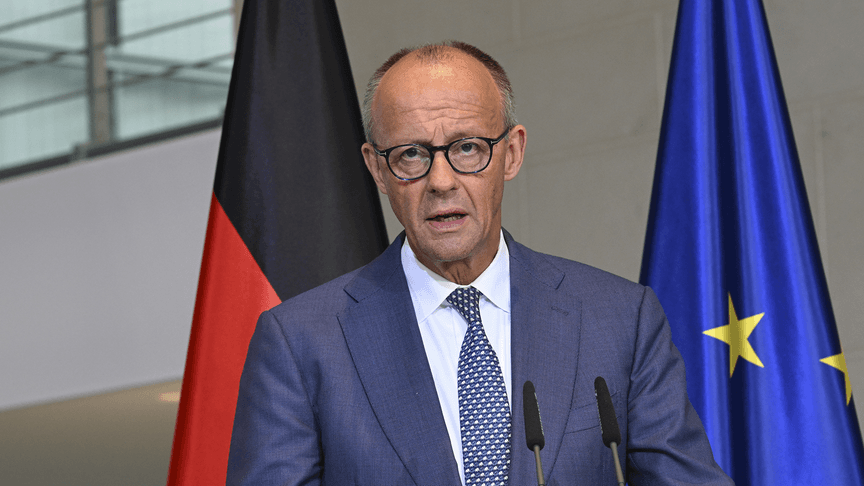
On Monday, German Chancellor Friedrich Merz declared that the results of the regional state election in Mecklenburg-Vorpommern represented a "powerful blow" to his conservative party, the Christian Democratic Union (CDU), but he explicitly denied any intention to resign from his position. In a statement issued from the party headquarters in Berlin following leadership meetings, Merz emphasized that the historic loss suffered by the party, where its result dropped to only 4.9%, causing it to exit the state parliament for the first time in its history, reflects a profound transformation in the German political system rather than merely a personal failure on his part.
The Chancellor stated that the negative results for the CDU in Mecklenburg-Vorpommern and Berlin indicate the rise of right-wing and left-wing populist parties, describing the Alternative for Germany (AfD) and the left-wing party as "destructive forces." She also thanked the Social Democratic Party (SPD), her partner in the federal coalition government, for reaffirming its commitment to continuing in government despite Sunday's election results. Merz confirmed that the government owes answers to the people regarding their concerns about jobs, family futures, pensions, and healthcare.
She added that the historic challenge facing the Berlin coalition is to prepare the country for the coming years by addressing these sensitive issues, while emphasizing that the party will analyze the results in the coming days to draw lessons from them. Although she described the result as a shock, she affirmed that the reasons for the loss go beyond her person and point to broader structural changes in the German and global political landscape.
Analysis & context
Analysis & Context
From an analytical perspective, these results reflect a radical shift in German political balances, where traditional parties have declined in favor of populist forces exploiting economic and social anxieties. This transformation places the coalition government before significant challenges to maintain its stability and address growing street demands for economic and social reforms.
In the broader context, the CDU's loss in eastern German states such as Mecklenburg-Vorpommern indicates the erosion of its traditional electoral base amidst deep demographic and economic changes. This decline opens the door to reshaping political alliances and could lead to constitutional or parliamentary changes if the government fails to address citizens' concerns.
The rise of far-right and populist left-wing parties is a sign of sharp political polarization that may affect migration and social security policies in Germany. This polarization requires political leadership to adopt discourse that combines economic reform with maintaining social cohesion without neglecting people's legitimate concerns.
Finally, the government's commitment to reforms despite electoral pressure indicates an attempt to restore public trust through concrete policies. The success of these efforts will depend on the coalition's ability to deliver on its promises in healthcare, employment, and pensions, areas that citizens are increasingly focusing on.