Sourced fact
The News
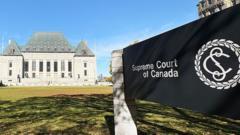
Yesterday Friday, the Supreme Court of Canada upheld the validity of Quebec's Bill 21, which prohibits public sector employees from wearing religious symbols such as the hijab and the cross, with an exception for elected officials who may wear face coverings for religious reasons. This ruling came after a variety of parties, including Muslim, Sikh, and Catholic female teachers, challenged the law, arguing that it violates their fundamental rights.
This judgment represents one of the most significant cases overseen by the Supreme Court in Canada's history. Quebec's original Bill 21 was adopted in 2019 under the "notwithstanding clause" of the Canadian Constitution, which allows governments to override certain rights, such as freedom of religion. While a majority of the judges supported the law generally, three judges voted against parts of it, arguing that using this clause does not uphold laws that conflict with Canada's free and democratic nature.
Canadian Prime Minister Mark Carney stated in interviews with CBC that his government would study the implications of this ruling, emphasizing the importance of all parliaments respecting the rights and freedoms of all Canadians, including minorities. Meanwhile, a leader of the Canadian Council of Muslims indicated that the law is discriminatory because it bars entire groups from working not due to their actions but due to their identity.
On his part, the head of the Montreal English School Board expressed disappointment in the court's decision, though he found some comfort in certain statements made by the judges. Conversely, the leader of the Bloc Québécois party defended the court's decision, stating that it supports the province's right to protect its values and unique identity, pointing to the ability to move forward in preserving the elements that define the nature of Quebec's unique society.
Civil rights organizations in Quebec have criticized the law, arguing that it disproportionately affects women who wear the hijab and excludes them from important areas of public life in the province. Additionally, the court noted that Canadian courts have the authority to declare whether any law is consistent with the Charter of Rights and Freedoms, even when using the notwithstanding clause, but did not do so in this specific case.
Analysis & context
Analysis & Context
From an analytical perspective, this ruling represents a profound legal and political turning point in the relationship between Canadian national identity and Quebec's unique regional identity. The court's affirmation of the law's validity reflects the ongoing tension between principles of universal liberal democracy and the right to cultural self-determination for provinces with strong historical and religious distinctiveness.
In a broader context, Bill 21 embodies the principle of strict secularism (laïcité) that Quebec has adopted for decades as an essential part of its national identity, distinguishing it from the rest of federal Canada. This principle aims to strictly separate religion from the state to ensure the neutrality of the public sphere, which differs radically from the secular model in the United States or Western Europe, where greater degrees of religious symbols are permitted in public spaces.
Furthermore, the ruling highlights the controversy surrounding the "notwithstanding clause" in the Canadian Constitution, which grants provinces the right to override some human rights provisions, creating a complex legal layer that could threaten the unity of fundamental rights if used extensively or without precise safeguards.
Finally, the political support from the Bloc Québécois party for the decision indicates that preserving Quebec's values and unique identity remains a top political priority, even in the face of federal court rulings that may appear contradictory to some religious minority demands within the province.