Sourced fact
The News
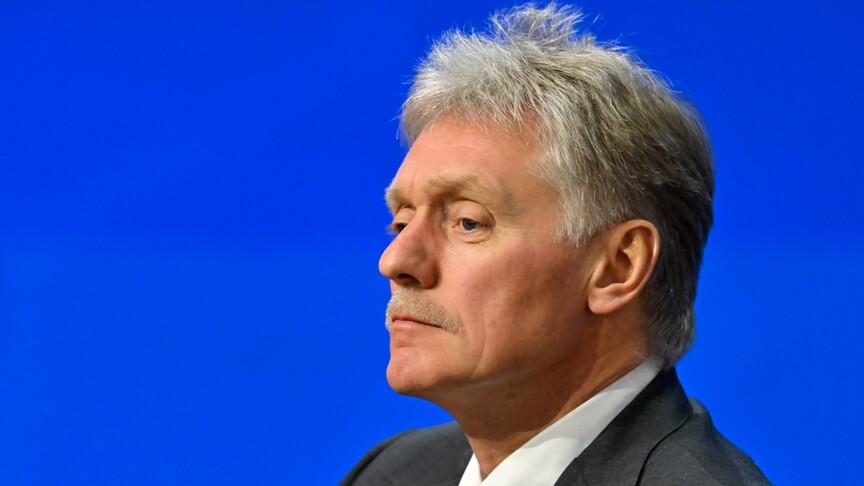
On Sunday, Kremlin spokesperson Dmitry Peskov warned that supplying Elon Musk's "Starlink" satellite systems to carry out deep strikes inside Russian territory constitutes a "dangerous" and "greedy" step. This warning came during an interview with the Russian Vesti channel, where Peskov emphasized that Russia possesses sufficient military and technical capabilities to ensure its national security without needing such external systems.
Peskov stated that providing Musk's satellite systems to execute strikes within deep Russian territory would be "a step that could cause significant damage and may be dangerous and greedy." These remarks come in the context of Finnish President Alexander Stubb's request on Thursday to Elon Musk to expand Starlink coverage to enable Ukraine to carry out strikes against Russian ballistic missile launch sites located within its own territory.
Regarding Russia's participation in the upcoming G20 summit, Peskov reported that Moscow has not yet made a decision regarding President Vladimir Putin's attendance, clarifying that Russia will study all circumstances related to this matter. He added that Russia will actively participate in the summit proceedings regardless of President Putin's personal stance.
Peskov also pointed to the current state of relations between Russia and the United States, confirming they remain "not in their best shape." These statements come amid escalating tensions concerning cyber security and Russian airspace, where the use of foreign space systems for internal strikes raises Kremlin concerns about threatening the country's critical infrastructure.
Analysis & context
Analysis & Context
From an analytical perspective, the Kremlin's reaction reflects growing concern over technological sovereignty for Russian national security. Relying on external communication systems like Starlink could open the door to risks such as targeting these systems or their use in unforeseen operations, which contradicts Russia's defense strategy focused on technical independence.
In a broader context, Peskov's statements indicate that Moscow remains hesitant about President Putin's attendance at the G20 summit, reflecting the divergence between the desire for international engagement and caution regarding domestic and foreign political implications. This hesitation may be an indicator of Russia's unstable position vis-à-vis the West and the United States in general.
Additionally, Finnish President Alexander Stubb's request to expand Starlink coverage highlights Ukraine's strategy to enhance its strike capabilities within Russian territory, a move facing strong Russian resistance. This tension demonstrates how space technology has become part of the geopolitical battle between major powers.
Finally, describing relations with the United States as "not in their best shape" confirms the continuation of long-standing diplomatic and economic tensions between the two countries. This situation creates an unstable environment that could influence Moscow's decisions regarding participation in international forums such as the G20 summit.