Sourced fact
The News
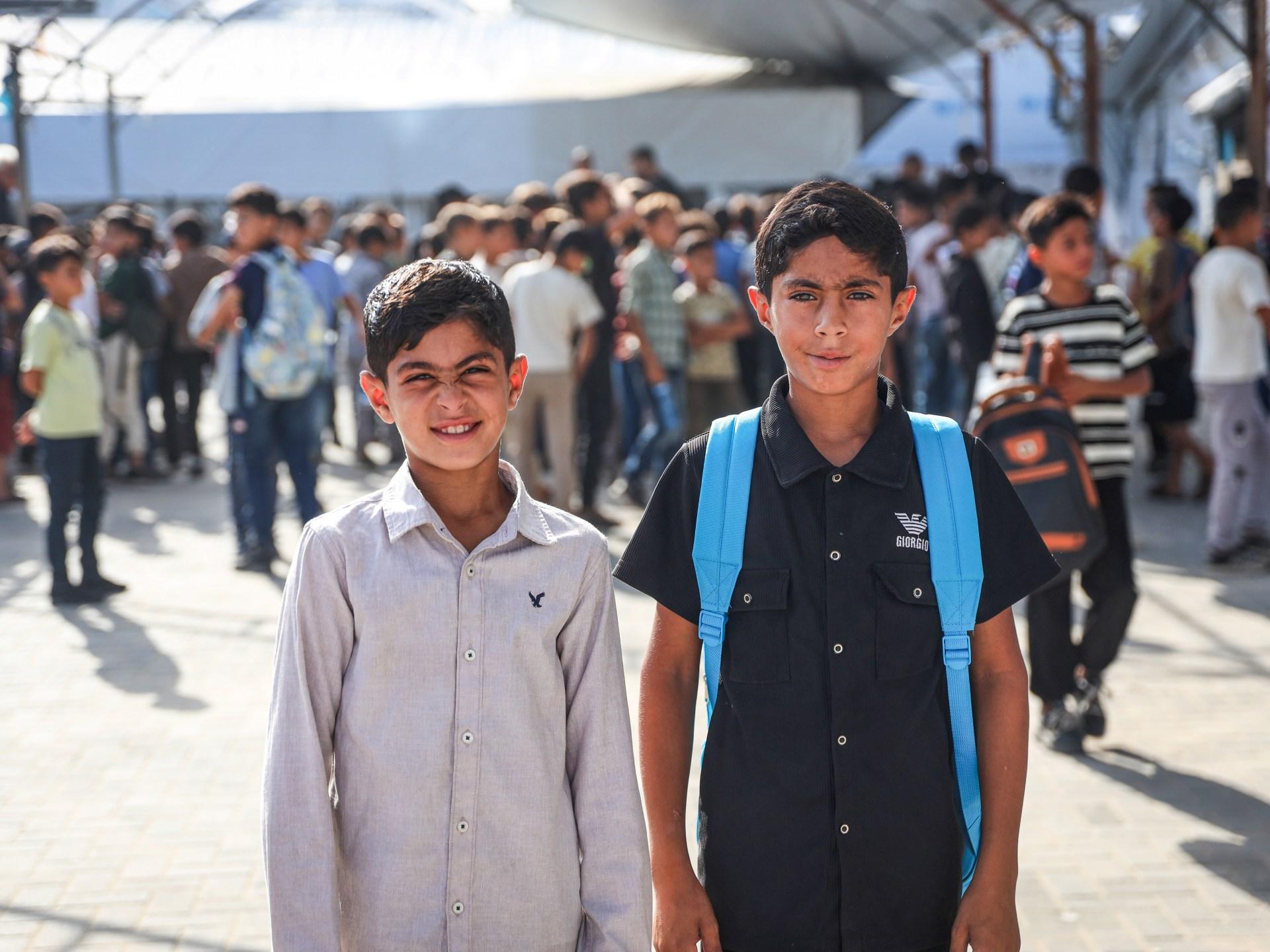
On Saturday morning, Rana Totouha restored the wheel of normal life in the Gaza Strip as she walked with her two sons toward the Al-Kateeba School in Gaza City, witnessing the return of school routines after years of turmoil and war. For Totouha, 30 years old, this moment is more than just the start of a new academic year; it represents the return to family life that was severed in October 2023 with the onset of the Israeli war on Gaza, which some have described as genocide.
The Totouha family was relocated from the Zeitoun neighborhood in central Gaza City to the Al-Kateeba area in the west. The previous night, they prepared for their children's return to face-to-face education inside the temporary Gaza Municipal School consisting of about 10 tents. Totouha described the day as a "beautiful day," akin to Eid al-Fitr, stating that she prepared her children as if it were an ordinary day despite the difficult conditions she endured over the past months, where survival was the priority before studying.
Statistics from the Palestinian Ministry of Education and Higher Education indicate that approximately 541,000 students have returned to schools in Gaza with the start of the new academic year on September 19, following an incomplete reduction in the level of violence that persisted even after the temporary ceasefire in October 2025. However, the return to classrooms still faces enormous challenges, as war has destroyed almost all buildings in Gaza and displaced most of the population, making education in temporary locations such as tents the current norm.
Analysis & context
Analysis & Context
From an analytical perspective, this scene represents a stumbling and complex return that achieved an important humanitarian milestone despite the environmental and human catastrophe that befell the sector. Returning to classrooms is not merely a routine educational activity but a serious attempt to restore the psychological and social stability of children who have lived through years of displacement and destruction, where education in tents and emergency situations was their only available alternative.
In the broader context, UNICEF reports indicate that nearly 98 percent of school buildings have been damaged since October 2023, with more than 93 percent requiring major repairs or complete reconstruction. This reality explains why hundreds of thousands of children still study in inhumane conditions lacking basic seats and tools, making the learning process extremely difficult and threatening to be cut off again at the first storm or Israeli airstrike.
The greatest challenge facing teachers and students is not only in the lack of material resources such as books and desks but also in the continuation of Israeli airstrikes that have resulted in student deaths during this month alone. These risks make the educational environment unsafe and force families to balance the necessity of education with the urgent need for survival amidst ongoing air and naval attacks.