Sourced fact
The News
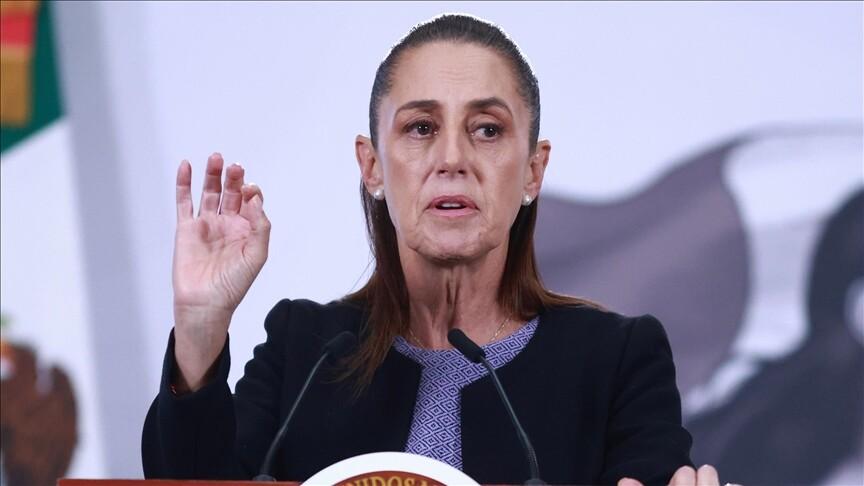
Mexican President Claudia Sheinbaum responded to criticisms from U.S. President Donald Trump during her address at the United Nations General Assembly, emphasizing the difficulty of living next to a state that produces significant amounts of weapons without resorting to negative comparisons. These remarks come after Trump repeatedly defended American intervention on Mexican soil to target drug gangs, which he claims are flooding the United States with illegal drugs.
Sheinbaum stated in a press conference on Wednesday morning that she would not describe Mexico as a hub for gang activity as Trump had characterized it, underscoring that both nations maintain good relations and work in coordination to achieve progress despite security pressures. She added that she does not wish to speak about the difficulty of living next to a state that produces weapons in abundance, preferring instead to focus on joint cooperation with the Trump administration and the U.S. government.
Relations between the two countries have been strained due to Washington's demands for the removal of officials from Mexico's Morena party loyal to the government on charges of drug trafficking, while Sheinbaum reaffirmed her willingness to cooperate with the United States while calling for respect for Mexican sovereignty. In another positive development, U.S. Drug Enforcement Administration official Terry Col praised the Mexican government and top security chief Omar García Harfuch for their efforts in combating drug trafficking.
Harfuch was described as a key American ally during the 40th International Narcotics Control Conference held recently in Argentina, reflecting the diversity of opinions on the security file between the two countries. The Sheinbaum administration continues to push forward cooperation with the United States while maintaining its firm stance on national sovereignty since Trump's return to the White House.
Analysis & context
Analysis & Context
From an analytical perspective, these statements represent a sensitive diplomatic turning point reflecting heightened tensions between Washington and Mexico regarding the concept of territorial sovereignty and how to deal with mafia gangs operating across borders. President Sheinbaum’s refusal to use language similar to Trump’s description of Mexico highlights Mexico's attempt to maintain autonomy in its security decisions without direct external interference in its internal affairs.
In a broader context, these tensions indicate the continuation of geopolitical struggles over control of the flow of drugs and illegal weapons flooding the United States, placing both countries in a position that requires a delicate balance between security cooperation and mutual respect for national sovereignty. The U.S. recognition of Mexico's security efforts despite political disagreements illustrates the complexity of the bilateral relationship that combines strategic partnership with competition for regional influence.
This scenario also demonstrates how cross-border issues such as drug trade require joint solutions, but the way these solutions are formulated can spark significant political debate in both countries and affect the stability of the entire region. Mexico's stance against direct military or political intervention reflects a defensive approach aimed at protecting its national interests amidst ongoing security challenges.