Sourced fact
The News
A UN report has concluded that recent US air strikes on vessels suspected of drug smuggling violated international law and could be classified as crimes against humanity, according to BBC News. Special Rapporteur Ben Saul stated in his report that at least 68 US strikes occurred in the Caribbean and Pacific oceans since last September outside US territorial waters, resulting in the deaths of more than 220 people.
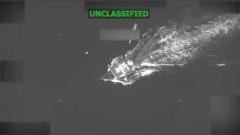
Saul noted that identifying targets as members of recognized terrorist groups does not justify these operations because they were not a response to an armed attack against the United States entitled to self-defense under international law. These assessments come two days after the US military announced the killing of four individuals in a strike on a ship in the Caribbean, where Southcom leadership claimed confirmed intelligence revealed the vessel's active participation in drug trafficking.
Saul clarified that such attacks represent a series of extrajudicial killings violating the right to life and are unjustified for national or personal defense or under international humanitarian law, maritime law, anti-drug laws, and counter-terrorism laws. The report concluded there is reasonable basis to believe the 68 strikes killing 223 people constitute crimes against humanity under customary international law regarding killing.
US Defense Secretary Pete Hegseth previously stated the comprehensive operation aims to remove "drug terrorists" from the hemisphere and protect the US from "drugs that kill our people," while officials provided no conclusive evidence linking targeted vessels to smuggling. This background included initial criticisms from Latin American leaders, as well as the controversial capture of Nicolas Maduro, who was leading opposition to the strikes at the time, in a US strike in Caracas earlier this year.
Analysis & context
Analysis & Context
Analytically, the UN report sparks significant legal and political debate regarding the legitimacy of US military operations outside its territorial borders in the Caribbean and Pacific regions. Describing these strikes as "crimes against humanity" marks a fundamental shift in international discourse toward anti-drug policies practiced by the US over recent years.
In the broader context, the document indicates that "Southern Arrow" operations launched in late September faced sharp criticism from Latin American leaders since their inception. These operations targeted citizens from regional countries, escalating diplomatic tensions between Washington and Caribbean nations as well as Brazil and Colombia.
It is notable that the report highlights the contradiction between US military claims about vessels' involvement in drug smuggling and the lack of conclusive evidence officially proving these accusations. This legal ambiguity has prompted human rights experts to question the legitimacy of using military force as a means to combat transnational organized crime.
The report also underscores political shifts in the region, including the arrest of Venezuelan President Nicolas Maduro during a controversial nighttime strike operation earlier this year, while Colombian President Gustavo Petro withdrew from the political arena after his pro-Trump candidate was elected in June.