Sourced fact
The News
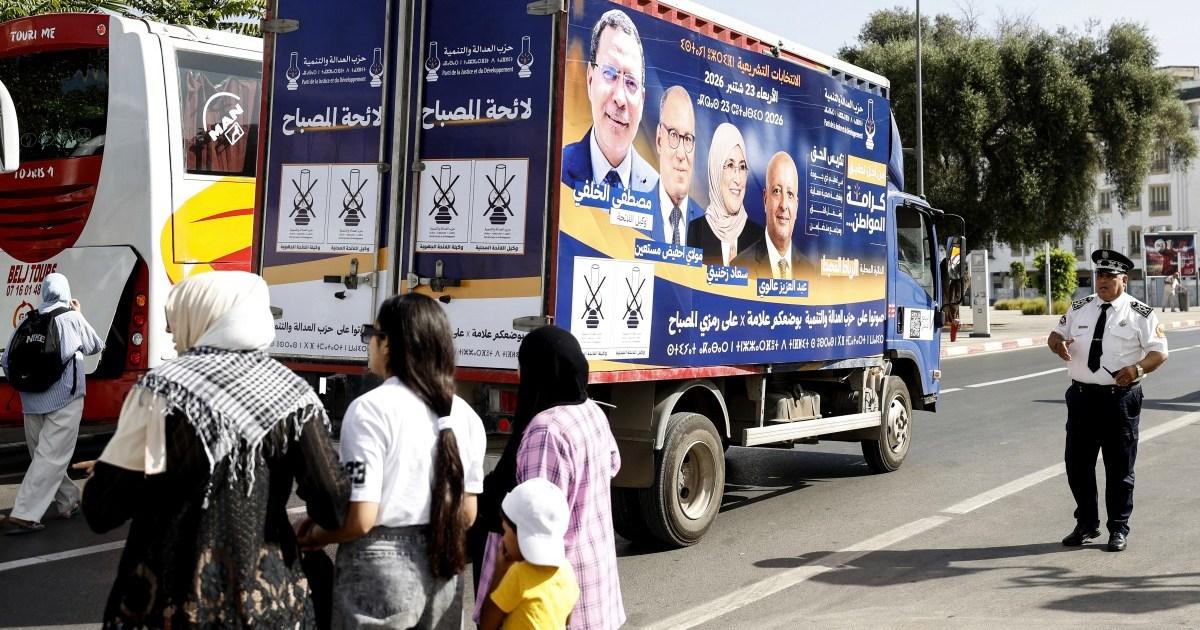
Political parties in Morocco are intensifying their electoral efforts ahead of the legislative elections scheduled for September 23, which will determine the composition of the next government of the Kingdom. Twenty-seven parties are competing for seats in the House of Representatives, which has a total of 395 seats, at a critical time when the country is facing increasing economic and social challenges. Rising living costs, pressures on public services, and high youth unemployment—among those aged 15 to 24, the rate is around 37.3 percent—are contentious issues topping election campaign agendas.
Party headquarters across the country and locations in crowded neighborhoods and cities have been transformed into electoral operations rooms, where campaign teams move through congested streets with loudspeakers and music to capture the attention of 15.8 million registered voters. Walid Chtaoui, campaign manager for the Justice and Development Party in the Sidi Youssef Ben Ali district, explained that the team carefully selects social interaction sites starting from a field map identifying areas where citizens congregate. He noted that they divide work between direct engagement and recording observations after each round or meeting to understand citizens' true expectations.
Jawad Chafdi, head of the Moroccan Observatory for Political Participation, emphasized that the success of any party ultimately depends on its community roots rather than just attendance numbers at headquarters. He stated that a candidate's strength, local outreach, network of relationships, and electoral record play crucial roles that can enable a small party to achieve major results, and vice versa. He added that winning votes is a complex system combining organization, local power, digital and direct communication, plus the party image and political offering.
Competition forces political groups to adopt multi-channel strategies balancing honorable work with digital campaigns to reach a wider audience. Fatima Tamani, a candidate for the Left Alliance in Ain Sebaa—a neighborhood of Mohammed Ben Abdellah in Casablanca—emphasized the necessity of direct communication with voters instead of relying solely on superficial campaign displays. She stated that they do not want to speak down to citizens but to listen to their concerns before speaking on their behalf to build a new political relationship based on clarity and responsibility.
In this same context, Youssef Ayat Sidi Said, a political activist for the Progress and Socialist Party in the Chechaoua province, said that the election campaign has become an opportunity for continuous communication with residents rather than just a period to showcase programs. He noted that digital platforms allow access to broad segments, especially youth, enabling them to interact and express their opinions, but they do not replace direct communication. He concluded by saying that field communication allows for direct listening while digital platforms expand reach and documentation, considering that direct interaction with voters must remain the hallmark of campaigns.
Analysis & context
Analysis & Context
From an analytical perspective, the report indicates that a party's success does not depend solely on its organizational presence but on its roots within society. Jawad Chafdi, head of the Moroccan Observatory for Political Participation, stated: "In the Moroccan context, the strength of a candidate, their local outreach, network of relationships, and electoral record play crucial roles."
Chafdi explained that winning votes occurs through a complex system combining party organization, candidate strength, digital and direct communication. He said: "The true criterion is not the number of people entering headquarters, but the ability to transform organizational movement into electoral mobilization, then into votes, and finally into seats."
In the broader context, political groups have been forced to adopt multi-channel strategies balancing field outreach with digital campaigns. Fatima Tamani, a candidate for the Left Alliance in Ain Sebaa—Mohammed Ben Ali neighborhood in Casablanca—stated: "We do not want to speak down to citizens, nor turn the campaign into a festival of images and slogans... we want to speak to them in clear language."
Youssef Ayat Sidi Said, a political activist for the Progress and Socialist Party in Chechaoua province, also affirmed that election campaigns have become an opportunity for continuous communication with residents. He said: "Digital communication platforms allow access to broad segments, especially youth, enabling them to interact and express their opinions, but we do not consider digitization can replace direct communication."