Sourced fact
The News
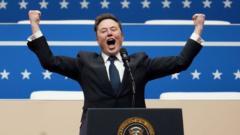
Elon Musk, CEO of Tesla and SpaceX, expressed embarrassment over the record-breaking amount he spent in U.S. congressional election campaigns amidst crushing defeats for the Republican Party. Speaking virtually at the annual Del Bock conference in New York, Musk stated he felt "stupid" after Democrats secured control of both the Senate and the House of Representatives, leading to a dramatic shift in the American political landscape.
Musk was the largest individual donor to this election campaign, contributing $446 million to support President Donald Trump's party, particularly in Texas, which hosts his two main companies. In a notable development regarding his position, Musk clarified that he is not part of the "Make America Great Again" (Maga) movement linked to the president, affirming that he does not blindly align with Republican policies as he had previously done. He noted that this stance represents a significant shift in tone compared to his period serving as an unpaid advisor to the president and head of the government efficiency program.
Musk remarked that candidates might have lost even without his massive financial contributions, yet he did not hesitate to admit that their results were extremely poor. He questioned the implications of these major losses for his company and others, especially given Democratic promises of strict scrutiny on tech companies and controversial data centers. In Georgia, where SpaceX operates data centers, the new Democratic governor pledged to restrict the construction of such large facilities and reduce tax exemptions granted to these corporations.
Additionally, Democrat James Talarico won the Senate seat in Texas against Republican Ken Paxton, a candidate who received at least $45 million in support from Musk according to a BBC analysis. Democrat Gina Henochosa was elected governor of Texas instead of Republican Greg Abbott, ending over three decades of Republican control of the state. Musk expressed his belief that the new governor is moderate and does not see her as an extreme leftist leader, expecting things to go well in Texas under her leadership.
Analysis & context
Analysis & Context
From an analytical perspective, this announcement represents a significant strategic shift for an influential figure like Elon Musk, moving from the role of an unconditional financial supporter of the Republican Party to a more neutral or even implicitly critical position. This retreat occurs against the backdrop of changing American political dynamics witnessing wide democratic shifts threatening the stability of traditional Republican influence in states like Texas.
In the broader context, election results indicate that Trump administration policies negatively impacted the cost of living in the United States, prompting voters to vote against the Republican Party. This shift may open a new chapter of regulatory challenges for major tech companies that previously enjoyed strong political protection under Republican leadership.
Furthermore, Democratic victories in Texas, a state controlled by other parties for over thirty years, point to a profound change in American political balances. The new governor, Gina Henochosa, has pledged to impose restrictions on large-scale construction projects for tech companies, which could affect SpaceX and Tesla's expansion plans in the state.
Finally, Musk's departure from his previous support for the right-wing movement reflects a deeper understanding of the geopolitical and economic changes facing the United States. This step may be part of a new strategy for his companies' survival in a changing political environment where pressure on the tech sector is increasing from Democrats.