Sourced fact
The News
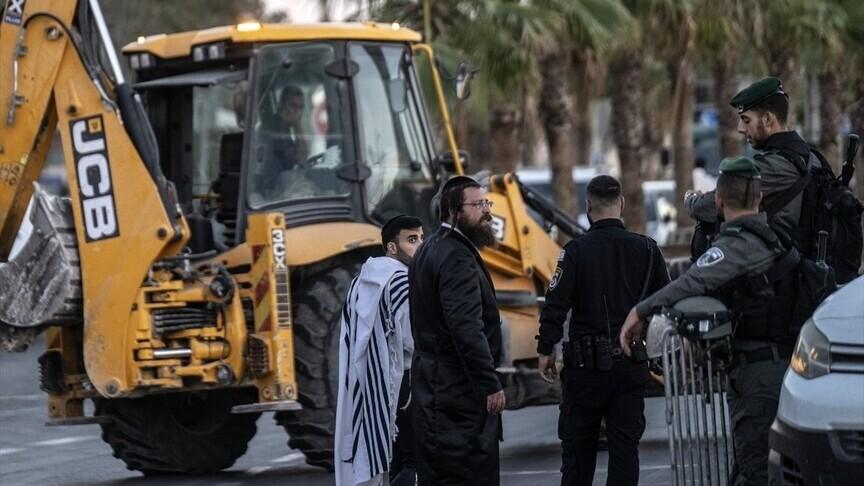
Israeli authorities closed several major roads and border crossings linking the West Bank with occupied Jerusalem late Sunday evening, coinciding with the start of the Jewish holiday of Yom Kippur, according to Anadolu Agency. The closures included routes regularly used by Palestinians for daily movement between different areas, creating chaos and anxiety among residents.
Witnesses on the ground told Anadolu that Israeli forces deployed troops heavily across Jerusalem to enforce extremely strict security measures. In some cases, vehicle entry was completely banned in specific areas, while major checkpoint crossings that allowed passage between the West Bank and Jerusalem were shut down.
These sudden measures significantly disrupted Palestinian movement, as witnesses reported that Palestinian residents from Jerusalem were trapped inside the West Bank territories and unable to return to their homes in the city. Residents described the situation as extremely difficult amid a lack of clear justification for these comprehensive restrictions that harm daily life.
This step comes as part of Israel's routine practices of restricting vehicle movement and closing roads during Jewish holidays, which begin with Yom Kippur on Sunday evening and end Monday evening. This day marks a religious Jewish celebration involving fasting, prayers, and suspension of many ordinary daily activities.
Analysis & context
Analysis & Context
From an analytical perspective, these closures highlight an Israeli policy aimed at controlling movement within occupied Jerusalem and in adjacent West Bank areas. The agency indicates that Israeli authorities exploit Jewish religious occasions to impose severe restrictions that negatively affect the mobility of Palestinian residents in the holy city.
In a broader context, security tensions around the Noble Al-Aqsa Mosque are escalating amid reports of increased police-supported Israeli raids on the area surrounding the mosque. Palestinian and international officials have warned against attempts to alter the status quo governing the temporal and spatial standing of the mosque, indicating ongoing conflict over this sensitive site.
It is worth noting that the Jewish holiday season began with Rosh Hashanah on September 12-13, followed by Yom Kippur, then Sukkot from September 26 to October 2, and concluded with Simchat Torah on October 3. These occasions are part of the Jewish religious calendar that directly impacts the security and political situation in the region.
Finally, the continuation of such measures underscores the challenges faced by Palestinians in their daily lives amid increasing Israeli restrictions. The agency notes that these restrictions affect not only physical movement but also the social and economic ties between Jerusalem residents and those in the West Bank.