Sourced fact
The News
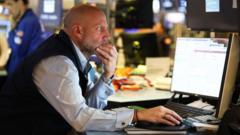
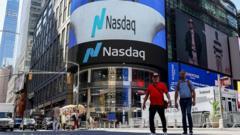
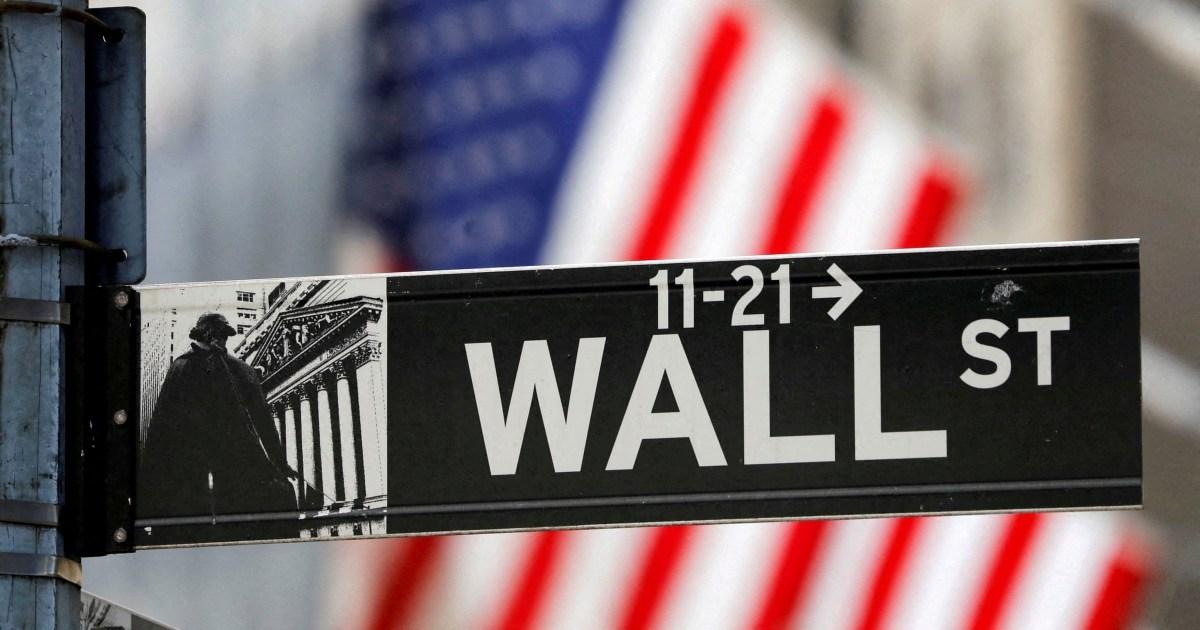
The Nasdaq Composite on Wall Street hit an all-time high, surpassing concerns over AI risks and energy shocks stemming from the US war with Iran. The Nasdaq Composite Index rose 0.45% on Tuesday, bringing its year-to-date gains to more than 17%.
Market gains were led by companies such as Canadian firm Monolithic Power Systems and Canadian Shopify, which increased in value by 8.1% and 7.1%, respectively. Micron Technology shares also rose by 5%, while chip giant Nvidia recorded modest gains of 0.7%.
On the other side of global markets, major Asian exchanges opened with modest gains: Japan's Nikkei index climbed 1.4%, South Korea's Kospi rose 0.1%, while Hong Kong's Hang Seng index fell approximately 0.7% during the morning session.
Oil prices remained stable on Tuesday after dropping more than 3% in the previous day, amid improved oil flows from the Gulf and expectations of a new diplomatic agreement between Washington and Tehran. Brent crude futures traded at $99.18 per barrel as of 01:00 GMT.
US President Donald Trump said on Tuesday that US officials held a "very good" meeting with their Iranian counterparts on the sidelines of the UN General Assembly in New York. He added that officials would continue talks in the near future, warning Tehran of the possibility of "destroying" Iran if it does not agree to an agreement regarding the war.
Jay Goldemberg, Senior Analyst at Cerberus Research Partners in San Francisco, noted that signs of diplomatic progress have redirected investor attention toward AI profit potential after years of massive investments. He pointed out that Meta's new AI assistant product, "Muse," represents a step in the right direction, even though it is merely a precursor to better products coming soon.
Analysis & context
Analysis & Context
From an analytical perspective, Nasdaq's strong performance indicates that investors have begun redirecting their focus toward AI profit potential after years of massive investments exceeding billions of dollars. Diplomatic developments between the US and Iran, where President Donald Trump described his meeting with Iranian counterparts as "good," contributed to easing energy shock concerns that had been affecting global markets.
In a broader context, artificial intelligence represents a primary driver of current economic growth, with products like Meta's "Muse" assistant seen as an important step toward finding clear consumer applications that justify heavy spending in this sector. Analysts believe that while these products may be just an initial step, they are sufficient to stir investor enthusiasm and confirm the economic viability of emerging technologies.
Global stock market fluctuations, including the performance of various Asian markets, demonstrate market sensitivity to intertwined geopolitical and economic factors. While Japan's and South Korea's markets benefit from the strength of their technology sectors, Hong Kong faces different challenges reflecting regional economic disparities and their impact on major stock indices.
Finally, oil price stability following a sharp decline reflects the influence of geopolitical factors such as US-Iran relations on global energy markets. This stability provides a favorable environment for continued growth in the technology and AI sectors, highlighting the close interconnection between energy security and technological development in the contemporary global economy.