Sourced fact
The News
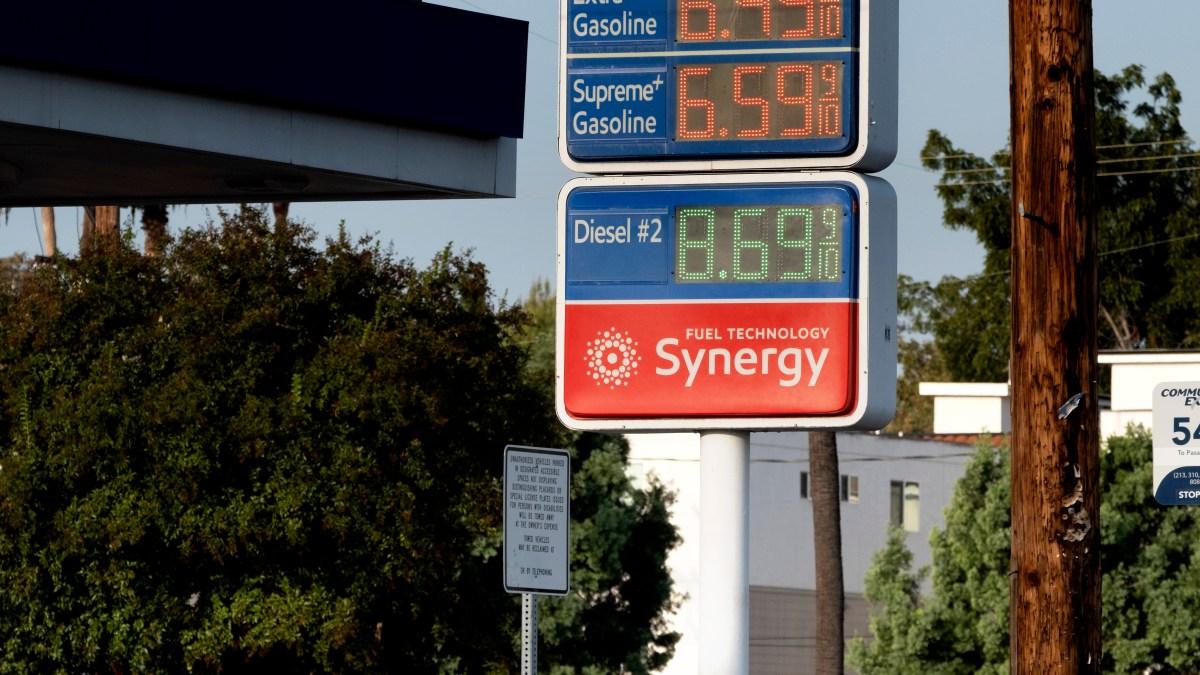
A report issued by QatarNews Agency (QNA) detailed the record-high surge in diesel prices in the United States driven by geopolitical tensions between Iran and the U.S., as well as the Russia-Ukraine war which has disrupted major oil trade routes. Data from the American Automobile Association showed that the average price of a gallon of diesel reached $6.50 on Friday, an increase from the previous month's $5.61, prompting U.S. officials to consider imposing export restrictions ahead of the upcoming election.
News sources reported that President Donald Trump's administration and some Republican members of Congress are studying the imposition of a temporary ban on U.S. diesel exports aimed at lowering costs for domestic consumers. Republican officials noted that the cost of living is the most critical factor in voters' decisions, as a poll showed that 47% of Americans consider it the top issue facing the next midterm elections.
In an effort to ease prices, Republican Senator Dan Sullivan from Alaska called for a temporary halt on diesel exports to rebuild inventories before winter, while Representative Tim Burchett introduced bills in Congress aiming either to impose a ban until January 2027 or tie exports to the per-gallon price. These calls come amidst U.S. diesel inventory levels dropping below 108 million barrels—the lowest in over four decades—according to the U.S. Energy Information Administration.
However, oil and gas industry experts have warned that any ban could produce counterproductive results by raising rather than lowering prices due to the global nature of the diesel market. An oil analyst at GasBuddy explained that producers cannot sell fuel below global crude prices; therefore, forcing them to cut production would lead to a supply shortage and higher prices globally.
Wood Mackenzie also echoed these concerns, noting that a ban could force refineries to reduce output, negatively impacting markets in Latin America and Europe which heavily rely on U.S. fuel. QatarNews Agency quoted an analyst from the Precourt Institute at Stanford University stating that a comprehensive ban is unlikely and that any measures must be controlled to minimize short-term disruptions.
Analysis & context
Analysis & Context
From an analytical perspective, the idea of imposing a ban on U.S. diesel exports faces sharp criticism from energy experts who warn of its unintended consequences. Since diesel is a global commodity traded in an open market, attempting to lower prices locally by preventing exports could actually reduce global production and raise prices worldwide rather than lowering them domestically.
In the broader context, global energy markets are suffering from a severe shortage due to the destruction of Russian oil refineries via drone attacks and reduced supplies in the Middle East. This shortage means that despite being the largest producer of diesel, the U.S. relies on exporting a significant portion of its output (about 40%) to fill the global gap, making any sudden political decision negatively impact global price stability.
Furthermore, analysis suggests that China is the only country with excess refining capacity that could compensate for U.S. supply shortfalls in case of a ban, but there are doubts about Beijing's willingness to intervene in global market affairs. Consulting firms like Wood Mackenzie have warned that filling U.S. inventories could force refineries to cut production by up to 750,000 barrels per day.
Finally, any government action on this scale will directly affect consumers in Europe and Latin America who heavily depend on U.S. fuel, potentially driving them to compete with other producers to lower prices or seek alternatives, highlighting the complexity of the global energy market and its deep interconnectivity.