Sourced fact
The News
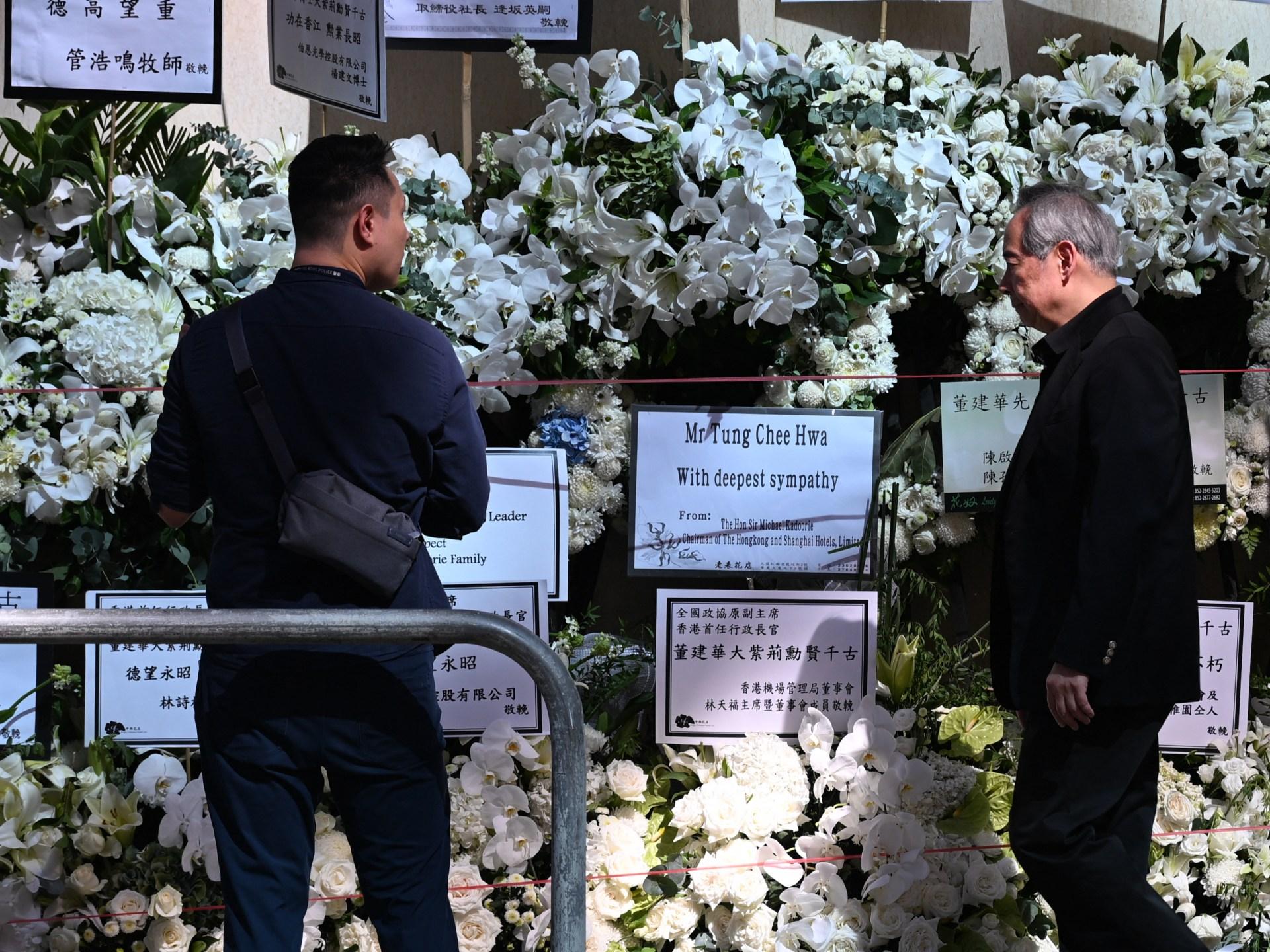
Hong Kong granted a state funeral to Tung Chee-hwa, its first leader after colonial rule, in a rare event that has occurred only three times since the city's return to China in 1997. Tung died on September 8 at the age of 89, and mourning ceremonies were attended by senior Chinese officials and Hong Kong region leaders.
High-level Chinese officials and Hong Kong authorities welcomed Tung upon his coffin at the funeral venue in North Point on Sunday, following a public procession that gathered dozens of political figures and business leaders. Tung was the city's first Chief Executive who steered it through the Asian financial crisis of 1997 and the onset of the SARS outbreak in 2003.
The funeral committee, comprising 87 members and chaired by Xi Taifeng, a member of the Standing Committee of the CPC Central Committee and Vice Chairman of the National Committee of the Chinese People's Political Consultative Conference, highlights official support from Beijing. Xi attended the funeral alongside Xie Baolong, the top Beijing authority on Hong Kong and Macau affairs; current Chief Executive John Lee; and former leaders Liu Chongying, Carrie Lam, and Dong Zhenzhang.
Li Wuluo carried Tung's coffin, draped with China's national flag, from the hall to the funeral car heading toward Capel Hill Cemetery. Tung was selected in 1996 by a Beijing-appointed committee to become the city's first leader after its handover from Britain, but he resigned midway through his second term in 2005 due to poor health.
Chinese media described Tung as a "patriotic figure," while his successor Dong described him as "a calm and modest man with far-sighted vision." In contrast, critics recall his tenure as marked by administrative conflicts and lingering public dissatisfaction that had not fully recovered after the financial crisis.
Analysis & context
Analysis & Context
From an analytical perspective, honoring Tung Chee-hwa in this manner represents an official response reflecting his historical role in leading the city during a sensitive transitional period after 1997. He steered the city through the 1997 Asian financial crisis and the 2003 SARS epidemic, and was also forced to delay national security legislation due to mass protests that year.
In a broader context, official Chinese media reports describe Tung as a "patriotic figure," while his successor Dong characterized him as a calm, educated man with far-sighted vision. However, critics note that his tenure was marked by governance challenges and lingering public dissatisfaction that had not fully recovered after the financial crisis.
It is also noted that Tung was selected in 1996 by a Beijing-appointed committee to become the city's first leader after its handover from Britain, reflecting Beijing's central role in shaping local leadership. Tung resigned midway through his second term in 2005 on grounds of poor health, but this move was widely seen as evidence of losing Beijing's trust in him.
Additionally, two business leaders, industrialist An Tse-kai and Takoon Henry Fok, who served as Vice Chairman of the National Committee of the Chinese People's Political Consultative Conference, were granted state funerals in 2000 and 2006 respectively.