Sourced fact
The News
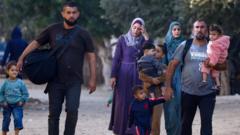
The Transitional Government in Syria has announced the facilitation of the return of dozens of Kurdish families to the Afrin region, which they were displaced from since 2018, following the fall of the Assad regime in December 2024. Internal Security Forces assisted in relocating hundreds of families from displacement camps in Hasakah to their homes in Afrin during April and May. This step comes within the state's efforts to stop the hemorrhage of displacement and reach out to residents in camps, where Khiero Dod, Director of the Afrin Region, emphasized that priority is given to rebuilding trust among all segments of Syrian society.
The process began as a pilot for the return of only 400 families but later evolved into a wave of returns comprising approximately 12,000 families through coordinated convoys managed by the state. Dod noted that implementing Decree No. 13, which recognizes the cultural and political rights of the Kurdish community in Syria, marks a new era of coexistence between Arabs and Kurds. One returning resident, Dilshad Hamdo, stated that people who used to live in his house asked for time to leave before his family departed, receiving a sum of $300 USD to finance their travel to Homs.
However, many returnees faced significant difficulties upon reaching their homes, which had been looted and vandalized during their absence over the years. Zeyna Sidi said she felt immediate joy upon announcing her return to her home, but that joy collapsed immediately upon arrival when she found it abandoned and converted into a sheep pen. She added that the house meant for humans had become a place for animal habitation, sparking her anger at the government's neglect of the population's needs in rehabilitating these destroyed houses.
Despite lacking sufficient funds for reconstruction, Sidi currently lives in a nearby displacement camp while camps previously inhabited by thousands of returnees from Afrin are filling up. She continued, saying that every time she tries to build something, she is forced to displace again, repeating the cycle of suffering that residents have endured for decades. Despite the pain of returning to the ruins of her former life, she refuses to leave the region again, driven by her hope for final stability.
Analysis & context
Analysis & Context
Analytically, the return of Kurdish families to Afrin represents a watershed moment in modern Syrian history, especially after the fall of the previous regime, which was a primary cause of the displacement of hundreds of thousands of citizens over recent years. Reports indicate that the Transitional Government is striving hard to stop the Syrian hemorrhage by reintegrating displaced persons into their original communities, reflecting a major political and social shift in the country.
In the broader context, the Afrin region was one of the most damaged areas in Syria due to repeated military operations and long-standing conflicts among various factions and external parties. The return of Kurdish refugees is a step toward rebuilding the social fabric in the region, despite the significant challenges families face in restoring their abandoned and destroyed homes resulting from looting and destruction that occurred during conflict periods.
Data indicates that the number of families returning to Afrin exceeded 12,000 since organized operations began in April and May, making this region a focal point for the Transitional Government's interests in reconstruction and stabilization. Moreover, the implementation of Decree No. 13 serves as evidence of the new state's attempt to strengthen trust among different components of Syrian society, particularly between Arabs and Kurds who have suffered from long-term conflicts.
The greatest challenge remaining for returning families is the ability to rebuild their homes, which were severely damaged or repurposed for other uses, given the lack of sufficient financial resources for rapid reconstruction. Nevertheless, the political and social will of Syrian families appears strong in staying on their land despite difficulties, reflecting the spirit of resilience and endurance that distinguishes the Syrian people throughout their long history of crises and conflicts.