Sourced fact
The News
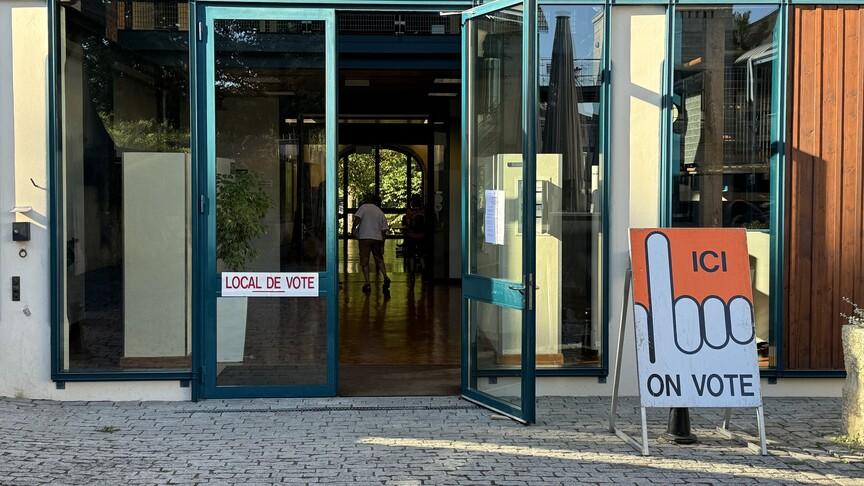
Official results announced today in Geneva show that Swiss voters have overwhelmingly rejected the constitutional initiative calling for stricter rules to enshrine neutrality, with 70.15% voting against the proposal and 29.85% in favor.
The initiative was rejected across all 26 cantons of the country, with "No" votes prevailing in every region, including the capitals of Bern and Zurich, as well as major cities such as Basel, Geneva, Lucerne, Solothurn, Fribourg, and Zug.
This rejection occurred because passing the initiative required a dual majority of both voters and cantons, while voter turnout for the referendum stood at only 47.06%.
Swiss Foreign Minister Ignazio Cassis explained that the Swiss people have chosen a neutrality that has proven its worth and provides the state room to maneuver to protect its security, independence, and prosperity amidst a changing and uncertain global geopolitical landscape.
Cassis stated that the result is not a vote against neutrality but a reaffirmation that Switzerland was neutral yesterday, is neutral today, and will remain so in the future, noting that the world is unpredictable and every war or crisis differs from the last.
The minister emphasized that neutrality does not mean rushing to take sides or expressing sympathy for warring parties, but rather Switzerland’s role in facilitating dialogue between warring states and assessing each case individually.
Cassis also noted that the Swiss government would remain able to make individual decisions on imposing economic sanctions or not based on what serves the country's interests, citing Bern's 2022 decision to adopt the European Union's sanctions against Russia as an example.
Separately, voters decisively rejected another food-related initiative by a margin of 72.52% against it, which sought to boost sustainable local production, encourage plant-based foods, and protect clean drinking water.
Swiss President Alain Berset said that the rejection does not mean stopping change but rather ensuring food security in a volatile international context, calling for continued development of the agricultural system to enhance resilience and protect natural resources.
Analysis & context
Analysis & Context
From an analytical perspective, this result reflects Switzerland's continued interpretation of its neutrality as a flexible policy rather than a rigid one, especially amidst accelerating global geopolitical changes. Experts view the rejection as a response to public desire to maintain diplomatic flexibility that has allowed Switzerland to mediate between conflicting parties and impose selective sanctions without violating its fundamental principles.
In a broader context, the referendum results indicate a shift in Swiss public opinion toward accepting a more active role in international affairs compared to the traditional model of absolute neutrality. This shift aligns with recent European developments where other European countries have adopted more engaged stances in security and economic alliances despite their historical commitment to neutrality.
The rejection of the food security initiative also highlights existential challenges facing Switzerland, including climate change and global economic pressures threatening supply chains. This decision is seen as a step toward adopting more realistic policies that balance independence with international cooperation to ensure the sustainability of national resources.
Finally, the government and parliament's stance on the initiative reflects a deep understanding of contemporary complexities requiring small states like Switzerland to be able to adapt quickly to multi-dimensional crises. This pragmatic approach ensures that Swiss neutrality remains relevant and effective in facing 21st-century challenges without sacrificing top national interests.