Sourced fact
The News
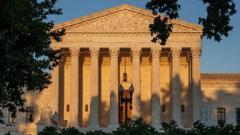
The U.S. Supreme Court has approved lifting restrictions on the Trump Administration's use of a controversial federal database that relies on citizenship information to identify voters suspected of not being citizens, allowing for broad sweeps of voter rolls ahead of the upcoming elections. This move follows the court's ruling that the 1996 Voter Registration Act prohibits comprehensive sweeps that could negatively impact the results of the mid-term elections scheduled soon.
The court spokesperson stated that federal law requires government agencies to respond to state requests for immigration and citizenship data, while the use of the "Save" program remains optional for each state. However, three liberal-leaning judges dissented from the conservative majority's decision, arguing that the harm caused by even a small number of lawful voters being disenfranchised outweighs any harm claimed by the government.
Judge Ketanji Brown Jackson, one of the dissenting judges, expressed concern that this decision could lead to wrongful deprivation of voting rights, explaining in her opinion that disturbing or depriving lawful voters carries far greater harms than any harm claimed by the government. Media reports also indicate that the system expanded last year allows for collective searches using sensitive data from Social Security records, which the court described as a violation of citizens' privacy.
The National Women's Voter Union and election rights activists called the decision "a deep disappointment," warning that millions of Americans could face illegal targeting weeks before the elections. In contrast, Trump Administration officials defended the use of the system as a necessary means to prevent non-citizens from voting, noting that 27 states currently use it to verify voter citizenship.
Brad Ravnsburger, the Secretary of State of Georgia responsible for elections, said his office conducts careful checks on data provided by the government and verifies the identity of suspicious individuals through personal interviews to ensure no one is deprived of their right to vote. However, serious criticism has been directed at the system after errors were discovered in Travis County, Texas, where it was found that as much as 10% of people identified as foreign citizens were actually lawful U.S. citizens.
Analysis & context
Analysis & Context
From an analytical perspective, this decision marks a turning point in the ongoing dispute between federal and local authorities over the management of voter rolls in the United States. The roots of this database date back to 1986 when the government created it to verify the citizenship of public assistance applicants, but the current administration has expanded its scope to include collective searches using sensitive data.
In the broader context, this ruling raises significant legal and social concerns regarding privacy protection and voting rights amidst a tense political climate ahead of the mid-term elections. Media reports have shown that the system may have misclassified up to 10% of American citizens as non-citizens in some states like Texas, highlighting the technical and legal reliability controversy surrounding the system.
This decision also reflects the current Supreme Court's tendency to grant broad executive powers in domestic election matters, which contradicts previous interpretations that protected voters' rights from direct federal interference. This has led to significant divergence in judges' opinions within the court itself, with the liberal minority opposing the decision on the grounds that potential harm to voters outweighs any security benefit the government might achieve.
Finally, the future use of this database remains tied to the will of individual states that make a local decision about its voluntary use, while legal efforts by prosecutors continue to ensure that previous federal court rulings remain valid in the face of this new interpretation.