Sourced fact
The News
The case of the murder of Dineo M is a painful episode within a wave of killings striking women in the Ekurhuleni region over the past two months. The 38-year-old victim's body was found half-naked and severely injured behind bushes in the outskirts of Johannesburg. Although authorities have not yet determined whether these crimes are linked to a serial killer, they have warned women to take precautionary measures due to similarities between some incidents.
The victim's sister, Carol, explained that this event goes beyond statistics to become a deep shock for families and society in a country where the government declared gender-based violence a national calamity in 2025. Carol stated she is still searching for a way to explain to her two-year-old daughter why her mother was killed so brutally and discarded behind bushes without being acknowledged. In this context, Home Affairs Minister Fikile Mbalula said that although there is no conclusive evidence of a serial killer so far, the investigation continues and no possibility is ruled out.
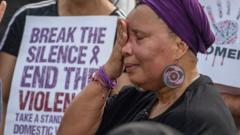
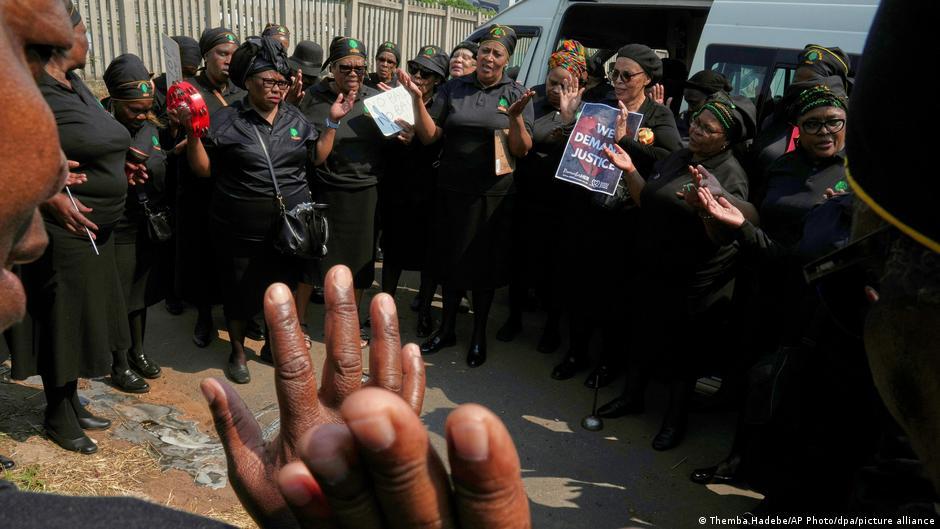
During a demonstration in Johannesburg, Deputy President for Women, Youth, and Persons with Disabilities Sindiso Khumalo emphasized the need to stop sexual violence, verbal abuse, and financial abuse, which often begins inside homes before escalating to murder. She stated that it cannot be accepted that insults turn into physical assault and then into murder, calling on society to stop this harsh behavior. Naledi Masipa from Gender Links also noted that laws alone are not enough to change the societal reality; the entire support system must work, starting from the police up to health and legal services.
Tegan Snyman from Amnesty International said that intentional killings against women are still classified as ordinary murders rather than femicide, calling for additional resources and a sense of urgency in addressing the crisis. In neighboring Botswana, official spokesperson Natasha Ramba reported that up to 37% of women have experienced violence during their lives, calling for collective action to address this issue that requires measures beyond government efforts alone.
Anne Mbevi-Anamla in Zambia explained that the roots of gender-based violence stem from inequality and societal expectations, noting that strong laws will not make a difference if communities continue to view violence as a private matter or a normal part of marriage. Carol concluded her remarks by expressing her hope that her sister's daughter grows up aware that what happened to her mother was not natural and that women deserve to feel safe, affirming that the real challenge lies in transforming protection and justice into tangible reality on the ground.
Analysis & context
Analysis & Context
From an analytical perspective, South Africa's 2025 declaration of gender-based violence as a national calamity reflects the magnitude of the crisis facing the country despite existing laws and policies aimed at combating this phenomenon. Amnesty International reports indicate that killings based on gender are still not recognized as a separate crime but classified as ordinary murder, reducing resources allocated to them.
In the broader context, neighboring countries such as Botswana and Zambia face similar challenges in combating violence against women. Statistics from Botswana show that 37% of women have experienced violence during their lives. Activists emphasize that laws alone are insufficient; full support systems must be activated, including health, legal, and psychological services to protect survivors.
Experts point out that the roots of this problem are deep and relate to power dynamics, inequality, and social expectations that make violence an accepted part of some communities. Transforming policies into actual protection requires changing a cultural mindset that views violence as a private matter or a normal aspect of marriage.
In conclusion, challenges in protecting women do not stop at enacting more laws but require real action on the ground to ensure women feel safe in their everyday communities.